Judge an animal coloring book by its interior, not just its cover. Check the largest coloring areas, the smallest details, the background, page layout, reading demands, intended supplies and the child's interest. A suggested age range helps you shortlist; a sample page helps you decide.
A cheerful cover can make two very different coloring books look equally inviting. One might contain large animal shapes with a few background details. Another might fill every corner with tiny patterns. The practical question is: can you imagine your child finding a comfortable place to begin?
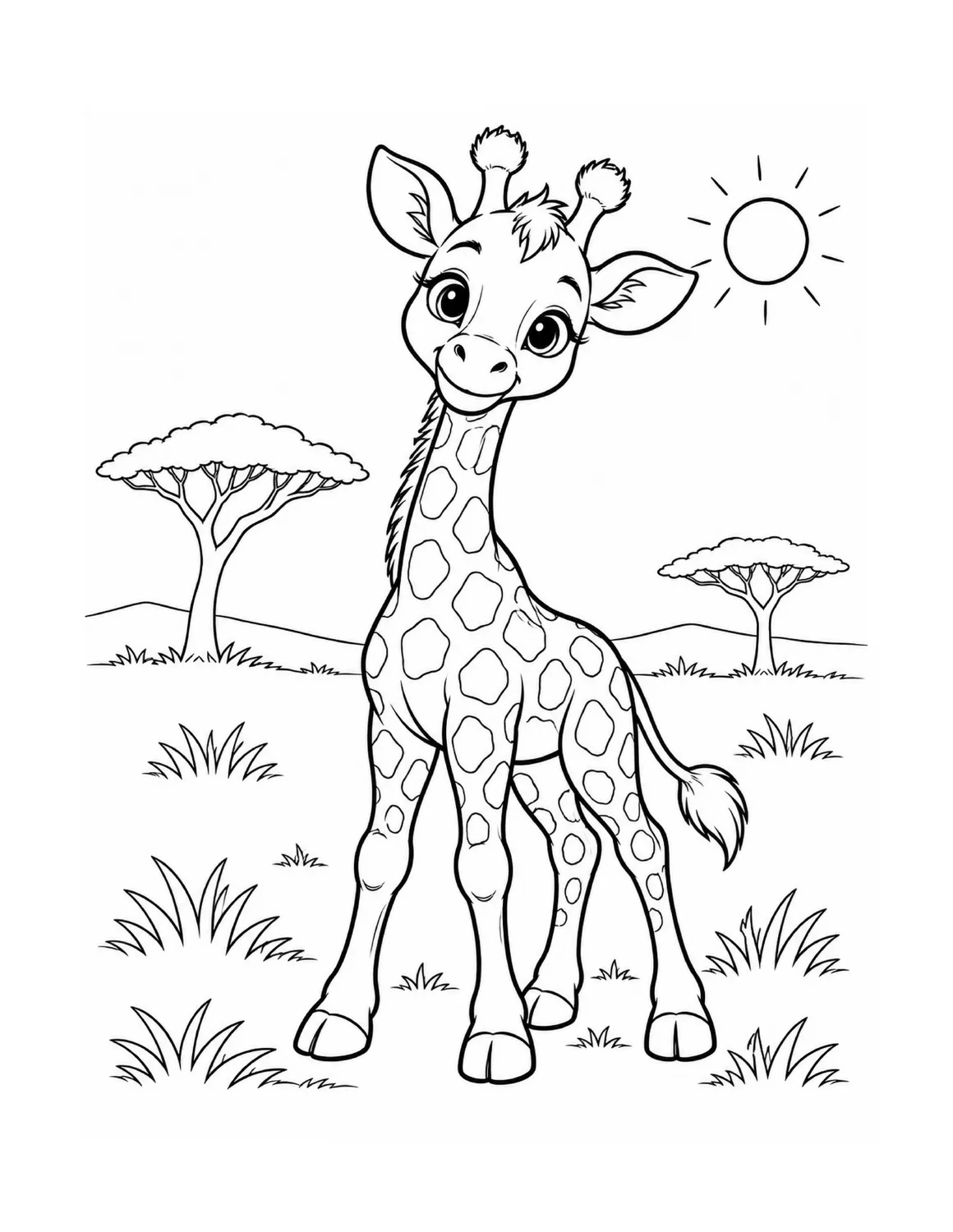
This guide uses an actual giraffe calf illustration from our Baby Animals paperback as a worked example. We publish that book, so this is a transparent look at our own interior rather than an independent comparison or a claim that it suits every child.
1. Find one generous area to start
Look for an area a child could identify and color without first making lots of decisions. In the giraffe preview below, the face and body offer starting points; the neck markings introduce smaller shapes. You can suggest one area and leave the rest for later. A page does not need to be completed in one sitting to be useful.
Try this preview question: “Would you start with the giraffe, the sun or a tree?” Their answer tells you more about the picture's appeal than asking whether they like the cover. It also avoids presenting the entire page as a task they must finish.
2. Inspect the smallest details too
A bold outer outline does not make every part of an illustration equally simple. Look at ears, eyes, fur, markings and grass. In this example, the eyes and tufts are more detailed than the face. A child can leave fine details white, use a different tool or color across them. Avoid buying a page on the assumption that staying inside every line is the goal.
3. Decide whether the background is helpful
A background can give a child extra choices: a blue sky, an orange sun or purple trees. It can also add more areas than they want to tackle. Here, the trees and grass can become a second session or simply remain uncolored. For a child who wants one isolated animal with no scene, look for an interior that actually offers that arrangement.
4. Check how coloring and text share the book
Look at the surrounding pages, not only the illustration. Does text sit inside the coloring space, beside it, or on a separate page? Our book pairs animal introductions and short facts with illustrations. That creates an option to read together, but the child can also concentrate on coloring without reading every sentence.
Do not infer blank reverse sides or removable sheets from a cropped preview. Check the book's interior and product information before choosing wet media or planning to tear pages out.
5. Match the picture to the supplies you have
| What you see | What to consider at home |
|---|---|
| Large body shapes | Crayons can be a convenient starting choice. |
| Small markings and grass | A sharpened colored pencil offers a different way to approach details. |
| A facing fact page | Check where ink could travel before using markers. |
| A bound paperback | Support the book comfortably without forcing the spine flat. |
The preview cannot establish paper weight or marker compatibility. We have not verified this paperback as marker-proof. If you already own crayons or colored pencils, begin with those; follow the supplies' age guidance and try a light touch before pressing harder.
6. Separate the age label from the child's preference
Baby Animals is intended for ages 4–8. Within that range, interests and preferred detail vary. A four-year-old may enjoy choosing colors for the broad face; an eight-year-old may enjoy designing a background or inventing a pattern. Neither activity requires every child of that age to color in the same way.
7. Choose the next step from what you actually saw
Before buying, name one feature that fits your child and one question that remains. “She likes the giraffe and we have pencils; I still need to check delivery” is a more useful decision than “the cover looks nice.” If the preview feels too busy or the theme does not interest them, choosing another book is a reasonable outcome.
Would this interior suit your next coloring session?
Our English Baby Animals paperback introduces 40 baby animals in an 88-page book. View the coloring and fact-page previews together, then check the current edition, price and delivery on Amazon.
Check the Baby Animals paperback on AmazonQuestions parents ask
Do thick lines guarantee an easy coloring page?
No. Inspect the size of the enclosed shapes and the background too. A bold outline can surround an illustration that still contains fine detail.
Can I use the preview as a printable coloring sheet?
These images are book previews, not a downloadable coloring edition. For an immediate no-purchase activity, draw an original animal on blank paper and let your child choose its colors.
Does a child need to read the facts independently?
No. An adult can read a short fact aloud, or the child can use the illustration without the reading activity.
About this guide: Little Wonder Club publishes the featured book. The visual observations describe the supplied interior preview; the activity suggestions are examples, not results from a child-development study. For a broader overview, read our guide to choosing a coloring book for ages 4–8.