Use short animal facts, open-ended questions, and habitat clues to make animal coloring time more engaging for children ages 4–8. Start with one idea, follow your child’s interests, and leave room for their own choices.
Animal facts work best during coloring when they start a conversation. Read one short fact, point to something on the page, and invite your child to imagine the animal’s world. There is no need to turn the activity into a quiz.
Start with what the child notices
Before reading anything aloud, ask “What do you see?” A child might notice big ears, stripes, a tree, or a tiny patch of grass. Follow that observation with one simple question: “Why do you think it looks like that?” Listen to the answer before sharing a fact.
Connect the animal to its home
A habitat is the place an animal lives. On a giraffe page, you might talk about open grasslands and trees. On an ocean page, you might ask what colors the water could be. Let your child decide whether to color the scene realistically or invent an entirely new one.
Use one fact at a time
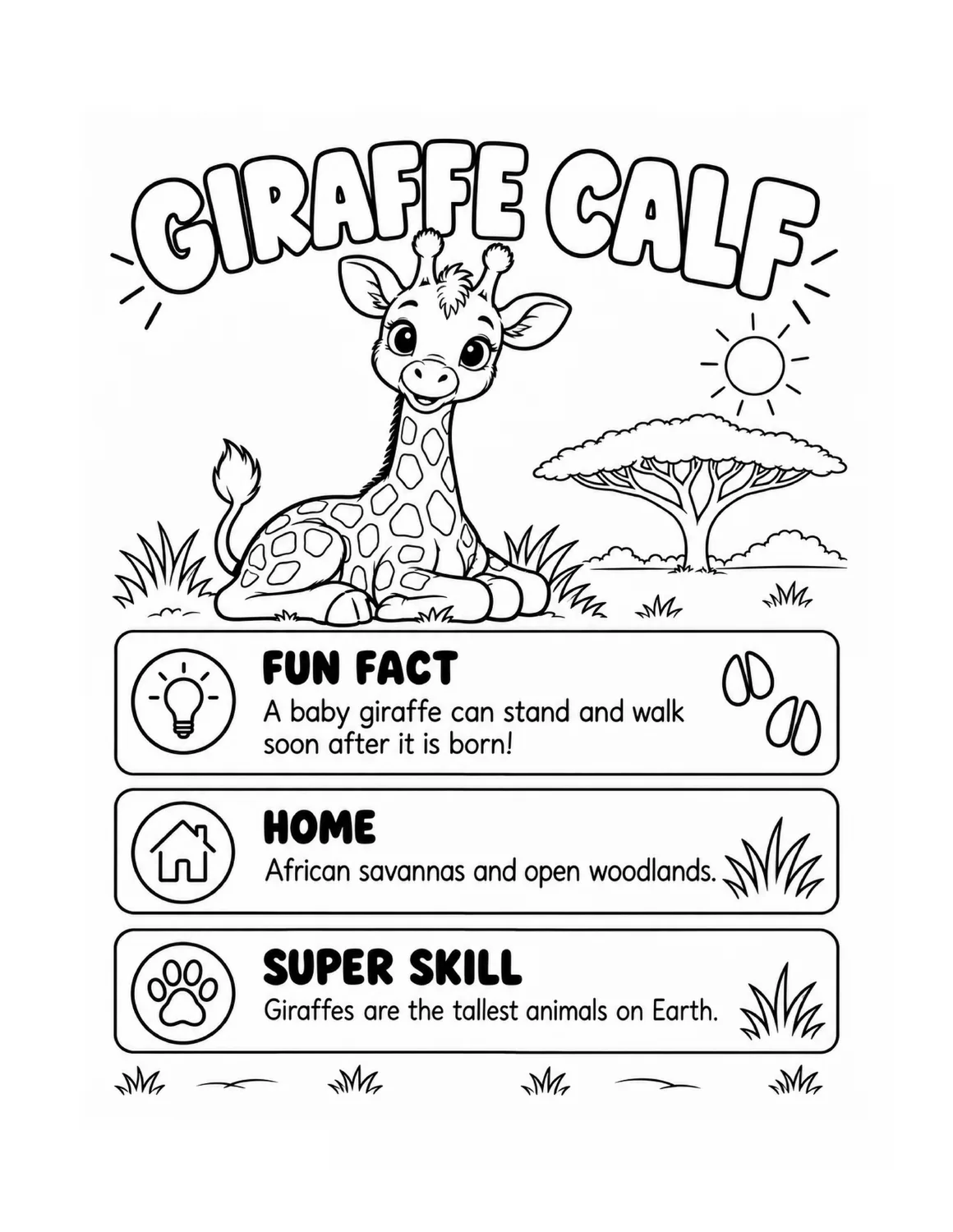
Wild Babies pairs each animal with a short fact, a home, and a “super skill.” For example, the giraffe calf page says that a baby giraffe can stand and walk soon after birth. That is plenty for one conversation: “What would you try first if you had legs that long?”
Try a three-question rhythm
- Observe: “What do you notice about this animal?”
- Wonder: “What do you think it might do next?”
- Discover: Read a short fact and ask, “Did anything surprise you?”
These questions work whether your child answers in one word, tells a long story, or prefers to keep coloring. You can return to the conversation another day.
Make curiosity the goal
Children do not need to memorize every fact to enjoy the page. Let them choose colors, invent stories, and ask their own questions. If a question comes up that you cannot answer, look it up together in a trusted animal reference later.
For more low-prep ideas, read our seven coloring activities for ages 4–8.