For a pretend-play paper placemat, trace or draw a large plate-sized circle, place an original animal beside it, and add a name area. Keep the paper for dry play; it is artwork rather than a washable or food-safe dining surface.
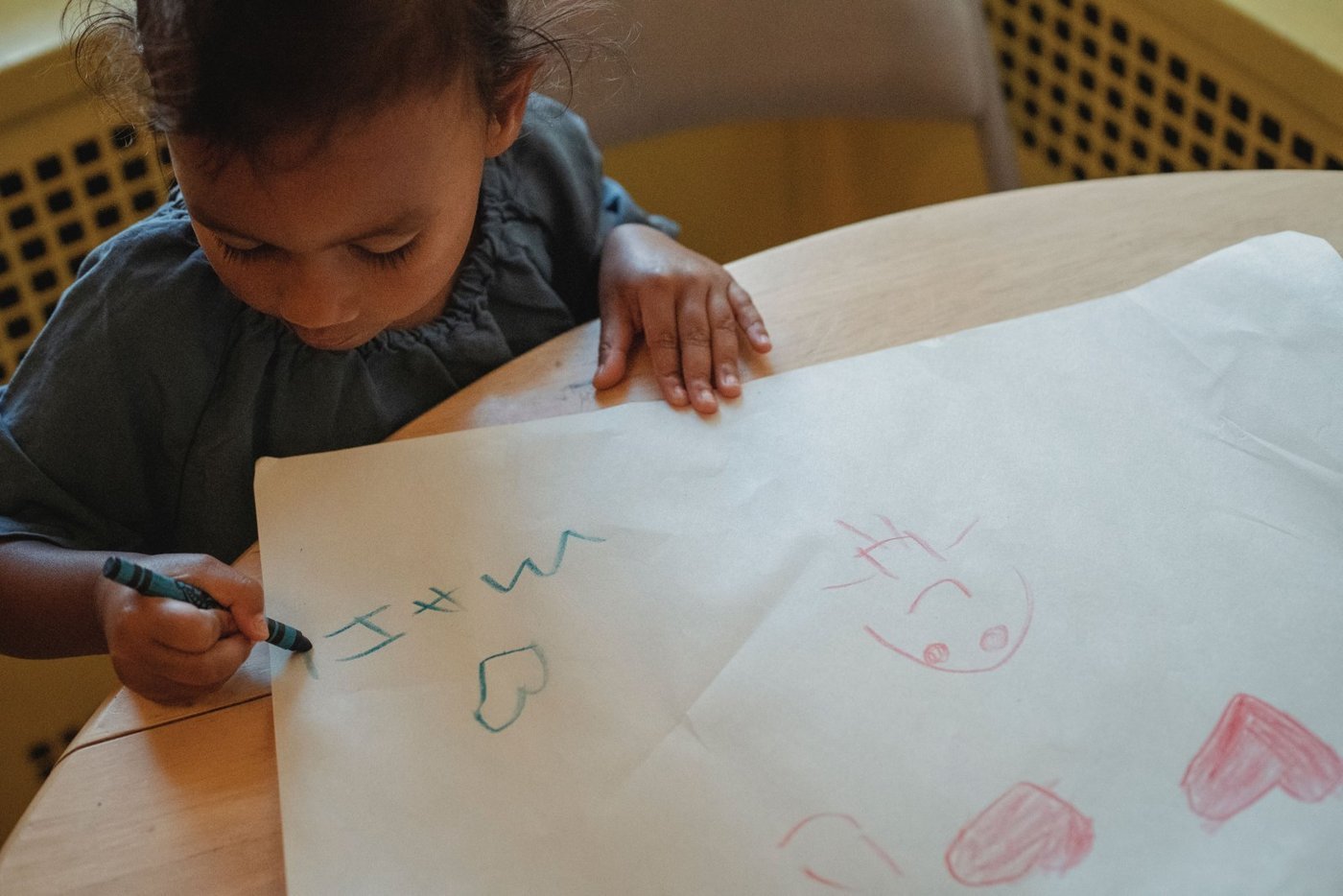
A pretend café or tea party needs a place for its imaginary meal. A paper placemat gives your child a design problem: leave room for the plate while arranging the animal and name around it. This project is for dry pretend play, so it does not require lamination or any claim that drawing materials belong beside real food.
Plan the surface before decorating
Use one sheet of paper, pencils or crayons, and an unbreakable pretend plate if you have one. An adult can help trace the plate’s broad outline or simply draw a large circle. Remove the plate before coloring so the paper sits flat.
Leave an open border around the circle. Choose where a name label and one animal will fit. The animal should remain visible when the pretend plate returns to its place.
Build a simple layout
- Draw the central plate area.
- Place a small original animal outside that area.
- Choose a clear rectangle for the character’s or guest’s name.
- Add one broad decoration along an edge.
- Put the pretend plate back and check which details remain visible.
A cat peeking from a lower corner might work better than a large face directly under the plate. If the child wants the hidden design anyway, keep it: discovering that it disappears is part of comparing layouts.
Decide what the labels mean
The name can belong to the child, a pretend guest, or the animal in the picture. An adult can write a dictated name while the child chooses its position. There is no need to add addresses or other personal details to artwork you may photograph or share.
A worked pretend setting
Make a place for “Moss the Imaginary Rabbit.” Draw a carrot-shaped symbol beside the name if the child wants one, but treat the meal as pretend rather than a feeding recommendation for a real rabbit. The menu and place setting serve a play story, not an animal-care lesson.
Keep use and storage practical
| Use | Practical choice |
|---|---|
| Dry pretend meal | Use clean play dishes on the artwork |
| Real meal | Use your normal suitable dining surface instead |
| Saving the artwork | Store it flat after the play session |
| Another guest | Make a new sheet or a separate name card |
Paper and art tools vary, and this guide does not certify them for food contact. You can enjoy the designed setting entirely through pretend play.
Questions parents ask
Do we need to laminate it?
No. Keeping it as dry-play paper art avoids an extra preparation step. If it wears out, your child can design another version using what they learned about the layout.
Can we use a book page as the placemat?
Keep the book intact and make original art on a loose sheet. A favorite animal picture can inspire the character without turning the bound book into a table covering.
Does every child need a separate one?
Let each participant choose whether to design a place or share a pretend guest’s setting. The project works with one sheet.
Would a ready outline suit today?
This project works with your own paper and drawings. If your child would rather begin with an animal outline, look at the real Baby Animals inside pages together. Little Wonder Club’s English paperback is intended for ages 4–8 and includes 40 baby animals, short facts, and 88 total pages. Choose it if the actual artwork appeals to your child; buying it is optional.
See the paperback and current ordering details on Amazon.
A related idea for another day
Illustrative stock photograph by Kamaji Ogino on Pexels, used under the free Pexels License. It is not a photo of our book or a demonstration of this exact project. Product details and linked factual sources checked October 10, 2026.
Explore Baby Animals
See the actual inside pages before deciding whether the book fits your child.
Check the paperback on Amazon