For a paper animal-track activity, compare two labeled references from a reliable source, draw their broad shapes, and make a short track path. Say what is visible separately from what you guess. An outline alone is not enough to identify every real animal track.
A few marks on a page can suggest that an animal has passed by. Children may enjoy guessing the traveler, but the useful part is slowing down to look at the clues. Keep this activity at the table and use labeled references so an invented paw shape does not become a false wildlife identification.
Start with an authoritative reference
The National Park Service's Patterns in the Snow exhibit discusses track patterns, and its Glacier National Park Track Stories activity uses tracks as a way to investigate a sequence. Those resources are useful background for a grown-up choosing a small comparison.
The activity below is an original, simplified family drawing project. It is not a field identification key, and it does not establish which animal made an unknown print outdoors.
Pick only two clearly labeled examples
Choose two references from the same reliable resource when possible. Keep the labels available. Look at broad differences such as shape, visible toes, or the arrangement of several prints. Do not begin with a large unlabeled internet collage, because it is harder to tell which animal and print belong together.
Use blank paper, a pencil, and familiar coloring tools. A screen or printed reference can stay with the grown-up while the child makes an original simplified drawing. You do not need to cut out or copy someone else's complete worksheet.
Make a side-by-side observation sheet
| Left side | Right side |
|---|---|
| A simplified drawing of reference one | A simplified drawing of reference two |
| The labeled animal name | The labeled animal name |
| One thing we can see | One thing we can see |
| One question we still have | One question we still have |
The drawings can be approximate. Write “not to scale” if you enlarge one to make the shape easier to see. A child who does not want to draw can point to differences while a grown-up sketches on the grown-up's sheet.
Separate observation from a story guess
“There are four marks” is an observation about your drawing. “The animal was searching for lunch” is a possible story. Label invented explanations as guesses. You can make several different stories from the same path without pretending the picture proves one of them.
A worked pretend path
Draw six repeated invented footprints heading toward a paper tree, then draw three more heading away. Ask, “What can we actually see?” Next ask, “What could have happened in our story?” The animal may have found shade, met a friend, or changed its mind. The imagined plot belongs to the child.
Keep real wildlife separate from the game
If your family later notices prints on a walk, follow the site's visitor guidance and observe from appropriate places. Do not pursue wildlife to check a guess. A photograph taken by a grown-up can become a later question, but local context and additional evidence matter for identification.
End with one new question
Choose a question you can look up next time: “Does this animal leave different front and back prints?” or “Why do several prints form a pattern?” Keep the reference and the child's drawing together in a folder. The project can finish with uncertainty rather than an unsupported confident answer.
Can I invent a fantasy animal track?
Yes. Give it a pretend name and a clearly fictional path. That is a creative drawing activity, distinct from identifying a real species.
A ready-made animal coloring option
If your child would like a picture to start with, preview the real Baby Animals pages. Little Wonder Club lists this English paperback for ages 4–8 with 40 baby animals, short facts, and 88 total pages. The original cover reads Wild Babies: A Coloring Journey Through the Animal Kingdom. Choose it for the pictures and layout your child enjoys; it is optional for this activity.
View the paperback and current ordering details on Amazon.
Keep exploring
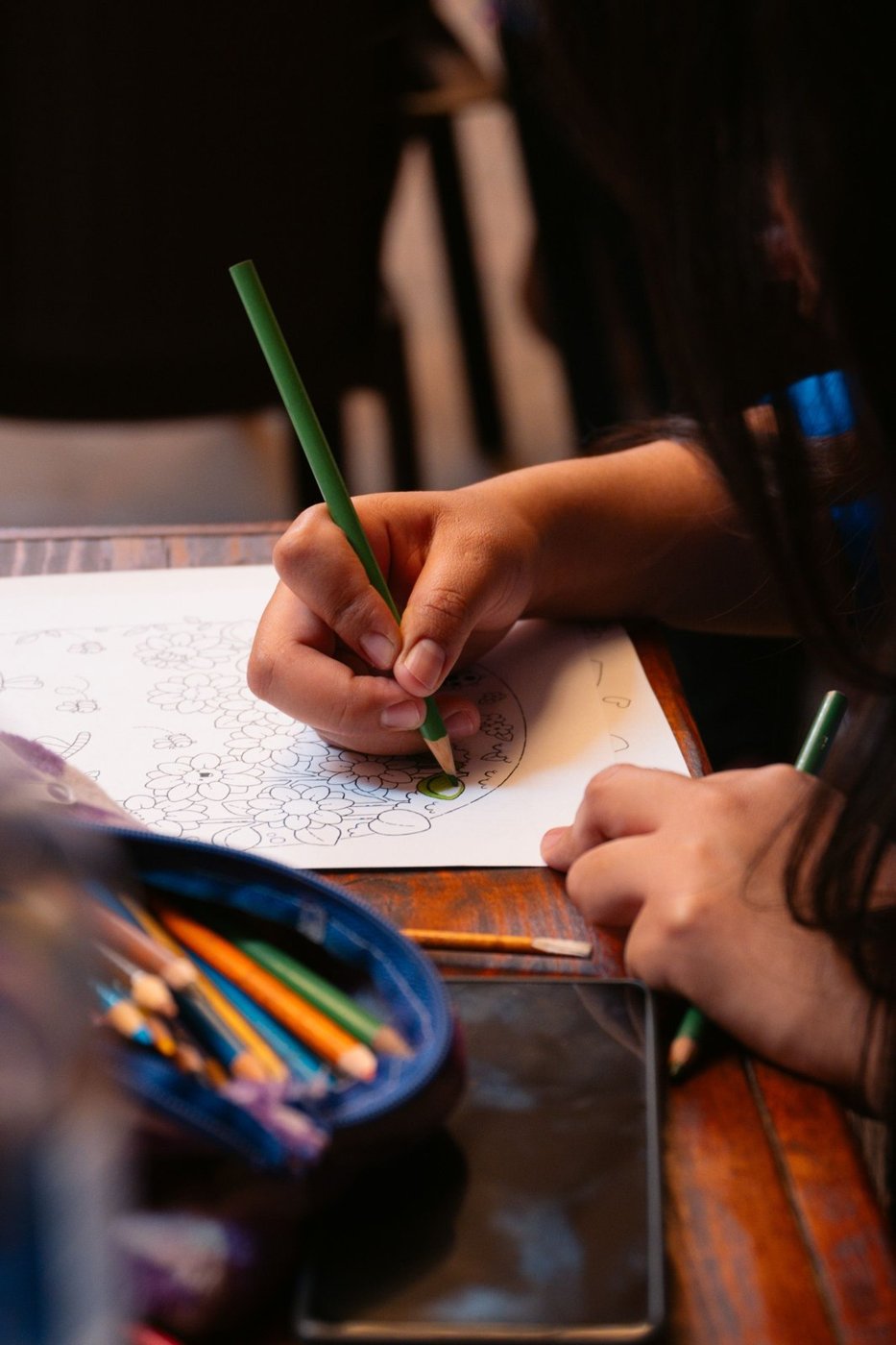
Illustrative stock photo by Allan González on Pexels, used under the free Pexels License. The photo does not show our book or demonstrate this specific project. Book details and linked factual sources checked October 9, 2026.
Explore Baby Animals
See the actual inside pages before deciding whether the book fits your child.
Check the paperback on Amazon