A book's total page count includes its printed page positions, which may contain illustrations, text, title pages or other material. The number of coloring designs is a separate figure. For example, our 88-page Baby Animals paperback contains 40 baby animals with coloring illustrations and short introductions; it does not contain 88 separate animal coloring pictures.
Page counts are easy to compare and easy to misread. A larger number on a listing can seem like more activities, even when the extra pages serve a different purpose. Before choosing a coloring book, ask what you will find when you turn each page.
Little Wonder Club publishes the example used in this guide. We explain its layout to help you read a book listing accurately, rather than ranking books by the size of their page count.
Four terms to keep separate
| Term | What to check |
|---|---|
| Total pages | The book's full interior page count, including material other than coloring illustrations. |
| Coloring designs | The number of separate illustrations intended for coloring. |
| Facing pages | The two page surfaces visible together in an open book. |
| Blank reverse | Whether the back of a coloring page is actually blank; this needs confirmation. |
A page and a physical sheet are not interchangeable terms: a sheet has two sides. Likewise, seeing text beside an illustration in a spread does not tell you everything printed on the reverse of that illustration. Inspect more than one spread or ask for clearer interior information when the layout matters to your intended activity.
Read our 88-page, 40-animal example
Baby Animals has an 88-page black-and-white interior. Its collection introduces 40 baby animals, pairing short introductions and facts with coloring illustrations. Some pages therefore have a reading role rather than offering another full animal to color.
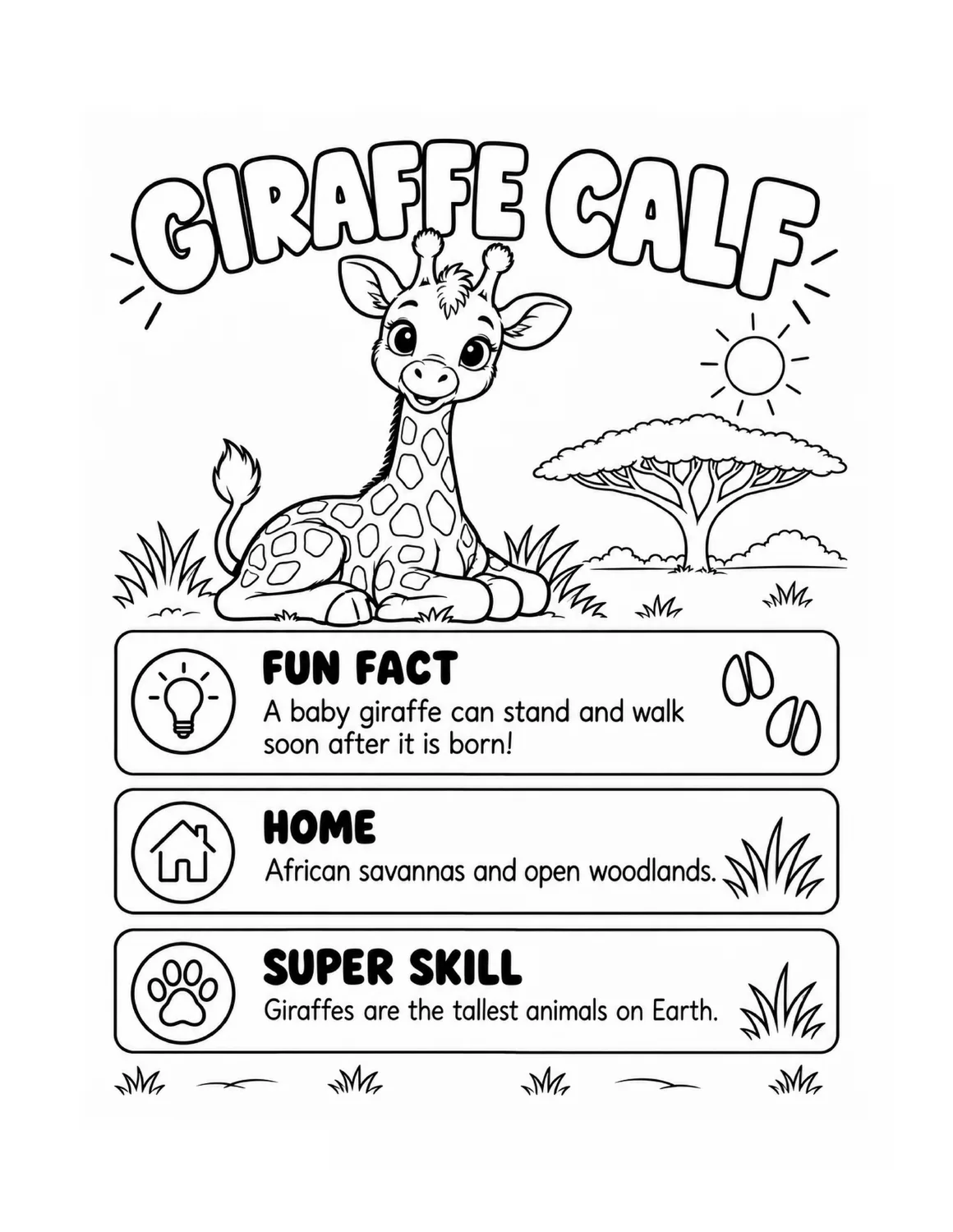
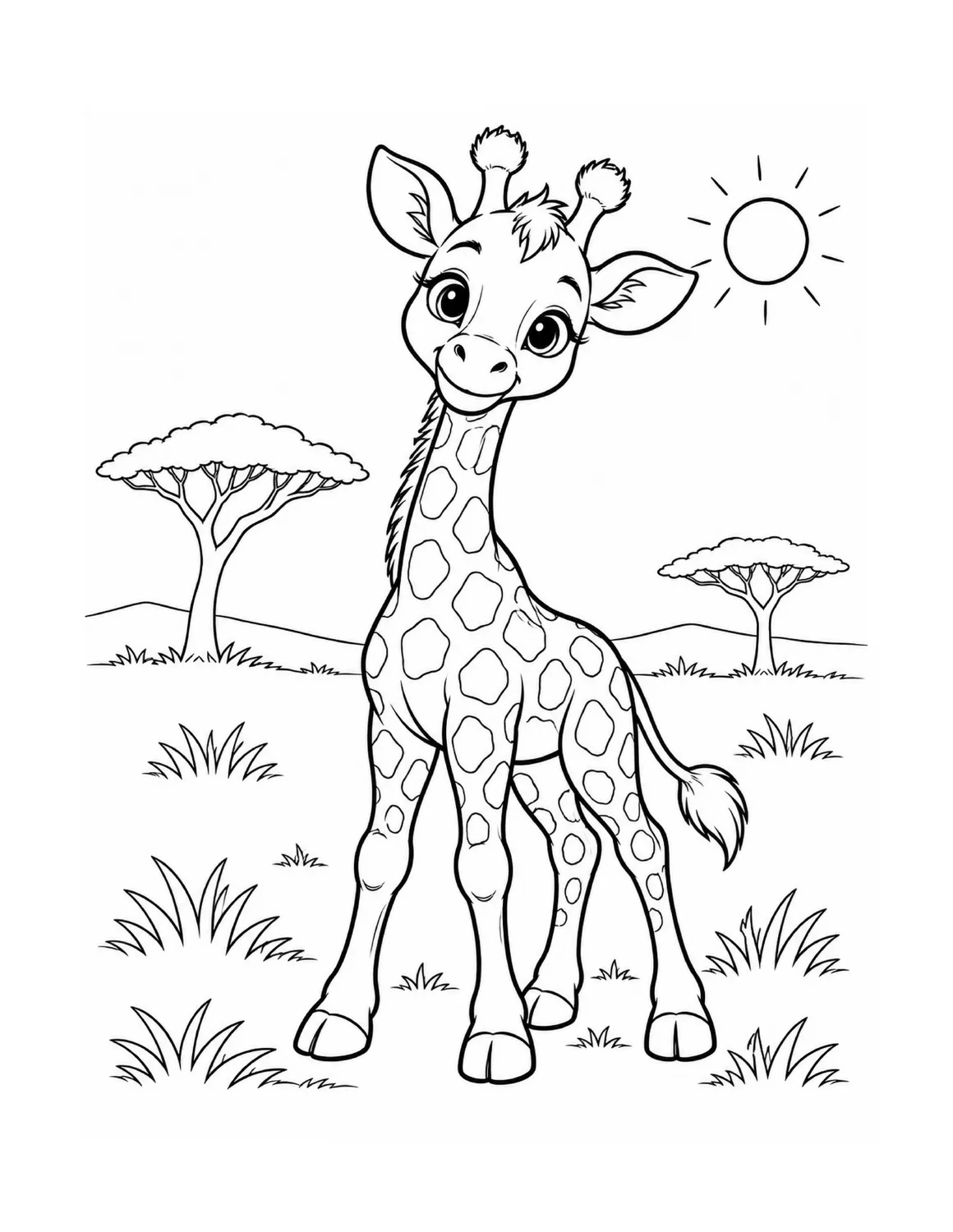
The supplied giraffe previews show the difference. One page introduces the giraffe calf; another presents the coloring illustration. The fact page can be read aloud, and the drawing page can be used on its own. Counting both as pages is accurate. Calling both separate full-page coloring designs would give a different and misleading impression.
Why text pages can still be useful
A short introduction offers a choice beyond filling shapes with color. An adult can read it while the child looks at the animal, or save it for another moment. Some families prefer that combination; others want almost every page devoted to drawing. Neither preference can be settled by the total page count alone.
When comparing books, look at the language, the amount of text and whether the child wants a reading activity alongside coloring. Our edition is in English and intended for ages 4–8. Independent reading is not required to enjoy the illustration, but an adult may need to help with the words.
What the layout means for crayons, pencils and markers
Crayons and colored pencils offer a practical place to begin in this paperback. We have not verified the book as marker-proof. Do not use the overall page count, a white-looking preview or a description of facing facts as proof that ink cannot reach other content.
Crayola's guidance for alcohol markers recommends suitable paper and a protective sheet beneath the page. That is general advice for those materials; it does not certify our book's paper. A protective sheet can help protect the following sheet, but cannot restore text or artwork on the reverse of the page you are coloring.
If you plan to use markers, check the exact media and edition before you buy. If preserving the book is your priority, start with dry media and gentle pressure. For separate wet-media artwork, use suitable drawing paper and the materials manufacturer's guidance.
Compare value using usable pictures
If you want to compare price per coloring illustration, divide the current delivered price by the stated number of designs, rather than by the total pages. Then ask whether those pictures actually appeal to the child. Forty images they want to revisit may fit your family better than a larger collection in a theme they do not enjoy.
That calculation still leaves out layout, paper, reading material and convenience. Keep those as separate considerations. A number can help you compare; it cannot tell you which book your child will choose from the shelf.
A five-question listing check
- How many separate coloring illustrations are included?
- What occupies the remaining pages?
- Are the reverse sides blank, or is there other printed content?
- Can I see genuine interior previews rather than only the cover?
- Do the format, language and suggested supplies fit our intended use?
Save the questions for your next book search. If the listing leaves a question unanswered, do not fill the gap with an assumption drawn from another edition or a similar-looking cover.
See the layout before choosing the book
Explore the actual Baby Animals previews, including coloring and fact pages. The original supplied cover uses the wording Wild Babies; our website presents it within the Wild Little Wonders series. Confirm the current edition and ordering details on Amazon.
Check the Baby Animals paperback on AmazonQuick answers
Does 88 pages mean 88 coloring illustrations?
No. In our book, the total includes animal introductions and other interior material alongside the 40-animal coloring collection.
Does a fact page mean the illustration has a blank back?
No. Facing-page content and reverse-side content are different layout questions. Check the complete arrangement before using media that could bleed through.
Are these pages perforated or removable?
We do not advertise this paperback as a perforated, removable-page edition. Treat it as a bound book rather than planning an activity that requires tearing out pages.
Source and scope
The page and animal counts describe our supplied book interior. For general marker-paper advice, see Crayola's paper guidance for alcohol markers (consulted October 1, 2026). No marker compatibility test of this paperback is claimed.