For a left-handed child, leave space on the left side, let them reposition the page, and move supplies away from the drawing hand. Try the setup on a scrap sheet first. Let comfort guide the arrangement rather than insisting on one prescribed angle or grip.
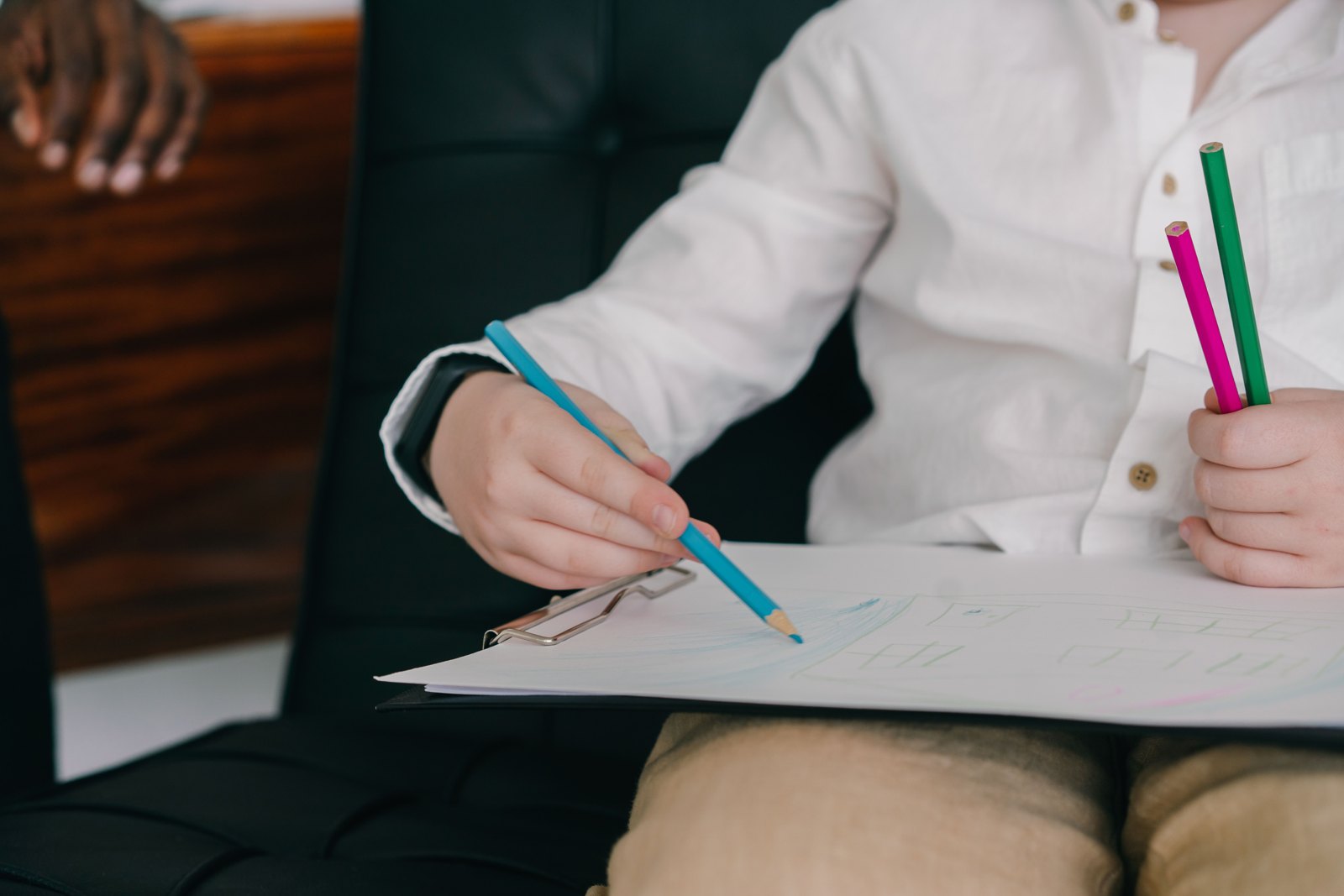
Photo: Mikhail Nilov / Pexels. Used under the Pexels License. Illustrative stock photography; people shown are not endorsing the book.
Sometimes the obstacle to a coloring session is the table arrangement. A supply cup sits where an elbow wants to go, the book’s binding interrupts a broad stroke, or another person is seated too close. Before buying special tools, try a few small changes and ask the child which feels better.
Start by watching the setup, not correcting the hand
Put a scrap sheet and a familiar coloring tool on the table. Ask the child to make a few marks wherever they like. Notice whether they keep moving the cup, rotating the paper, or leaning around the binding. Treat those movements as information about the workspace, not as something to stop.
This is a practical table experiment, not handwriting instruction or a developmental assessment. If a child reports ongoing pain or difficulty, seek individual advice rather than trying to solve it with a coloring arrangement.
Four changes you can test individually
- Leave clear space on the left. Move a wall-side seat or nearby tray if it restricts the child’s arm.
- Let the paper turn. A drawing does not need to stay square to the table edge throughout the session.
- Move the supply cup. Put it above or beside the page where the child can reach without interrupting the drawing hand.
- Separate neighboring seats. Avoid placing elbows in direct competition for the same patch of table.
Change one thing at a time. If you rotate the page, move the cup, change the chair, and switch pencils all at once, it becomes harder to know what helped. Ask “Do you want it here or there?” rather than “Is this the correct position?”
Check a bound book before starting a full picture
Open the chosen spread gently and see whether the child can reach the whole coloring area. Do not force the spine flat beyond what the binding allows. If the center edge feels awkward, use a separate drawing sheet for today or choose a page the child finds easier to reach.
| What happens | Try next |
|---|---|
| The cup keeps getting bumped | Move it above the paper. |
| The binding interrupts strokes | Test another spread or use loose paper. |
| Two elbows collide | Rearrange seats or increase spacing. |
| The page turns frequently | Allow rotation and keep the surrounding area clear. |
Use a two-minute comparison
Draw the same broad shape twice on a scrap: once with the current setup and once after one change. Ask which arrangement the child wants to keep. The purpose is their preference, so do not grade the marks or use neatness to overrule the answer.
Keep the arrangement flexible
A setup that works for crayons may need adjusting for a wider drawing pad. A child may also want different space when adding detailed pencil marks. Keep the supplies portable so the table can adapt instead of becoming a fixed system they must follow.
If siblings use the same space, give each person room to arrange their own page. Left-handed and right-handed children do not need matching stations. They need a usable surface, accessible materials, and permission to tell you what is getting in the way.
Frequently asked questions
Do I need left-handed coloring pencils?
Start with the tools your child already enjoys and adjust the workspace. Judge any new tool by its age labeling, instructions, and how the child actually uses it.
Should I keep rotating the paper for my child?
Offer help if asked, but let the child choose the position. Moving the paper themselves can be part of using the workspace comfortably.
Choose your next small activity
Want an animal page ready to start?
For a separate coloring choice, Wild Little Wonders: Baby Animals is an English paperback for ages 4–8 with 40 baby animals, large coloring pages, and short animal facts. Preview real inside pages and check the book details, then view the paperback on Amazon for current price and delivery. The activities above also work with your own original drawings; no purchase is needed.
Explore Baby Animals
See the actual inside pages before deciding whether the book fits your child.
Check the paperback on Amazon