An unfinished coloring page can be bookmarked, stored, revisited with a new color, paired with a separate drawing, or left exactly as it is. Ask the child whether they want to return to it before adding to or discarding their work. Finishing every section is not required for an enjoyable coloring activity.
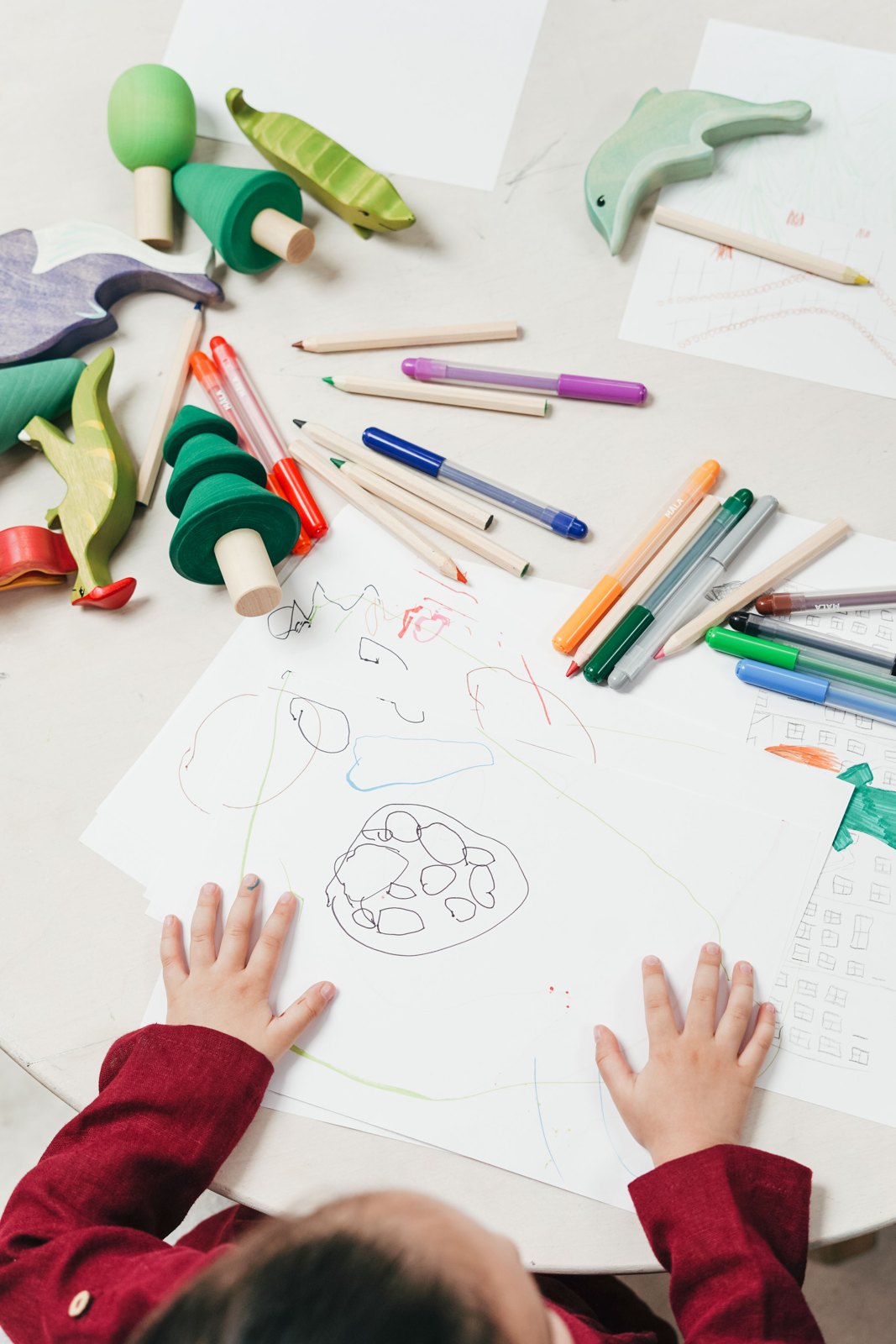
Illustrative stock photo: cottonbro studio / Pexels. Used under the Pexels License.
A partly colored page can hold a finished idea. A child may have wanted to color one animal's ears, try a new pencil, or spend a few minutes making marks. Stopping before every section is filled does not mean the afternoon went wrong.
Ask before making a plan for the page
Try “Would you like to keep this for another day, leave it this way, or choose something else?” The answer can change later. Avoid quietly finishing a child's picture for them or treating a new page as something they must earn by completing the old one.
For a bound book, keeping the page is simple: leave it inside and mark it if the child wants to find it again. Loose sheets can go in an in-progress folder.
Six options for an unfinished picture
- Bookmark it. Mark the page so returning does not require searching through the book.
- Save a color note. On scrap paper, record which pencils the child wants to use again.
- Choose one new area. On another day, offer a single part rather than asking for the whole page to be completed.
- Add a companion drawing. Use a separate sheet for an animal's home, a map, or another character.
- Display it as it is. If the child likes it, a partially colored picture can join the family display.
- Move on. Keep it in the book or make a storage decision together without requiring more coloring.
A worked example: returning to one detail
Suppose a child colored an animal's face and stopped. A week later they might choose to add a background color, draw a hat on separate paper, or simply look at the face and pick a new page. All three are reasonable choices.
A gentle invitation is “Do you want to do anything else with this one?” That leaves the picture available without turning it into a task list. If the child wants to match a previous color, use the saved test patch rather than guessing from the finished page.
Store in-progress work without making a pile
Keep bound books on a shelf and loose sheets in a folder that is easy to open. Label a section “in progress” only if the child finds that useful; some pictures may already feel complete to them. Our artwork organization guide covers current folders, displays, and archives.
During a shared-table cleanup, put away the picture with the same care as a finished one. A bookmark and a supply pouch can make the next session easy without leaving everything out overnight.
Turn experimentation into a separate activity
If a child wants a fresh start because a color combination surprised them, offer scrap paper for testing. They can try a new combination without changing the existing picture. Our pencil layering experiment provides a small test-sheet method.
Do not require them to repair, cover, or improve a patch they dislike. The page can remain a record of trying something.
Frequently asked questions
Should I make my child finish every page?
For this optional creative activity, completion does not need to be the rule. Invite a return and accept the child's choice.
Can I color the remaining parts myself?
Ask first. A shared page can be enjoyable when both people agree, but adding to someone's picture without asking can change work they wanted to keep.
What if the child never returns to it?
Leave it in the book or review loose-sheet storage together. A picture can be worth keeping even when nobody adds another mark.
Explore an animal coloring book for ages 4–8
Wild Little Wonders: Baby Animals is an English paperback with 40 baby animals, large coloring pages, and short animal facts. Explore the books and inside previews to decide whether its format fits your family. You can also view the Baby Animals paperback on Amazon for current price and delivery.
Explore Baby Animals
See the actual inside pages before deciding whether the book fits your child.
Check the paperback on Amazon