For an animal close-up, choose one part such as a face, ear, or eye and draw it large enough to reach the paper edges. A paper viewing window can help you decide what to include before drawing.
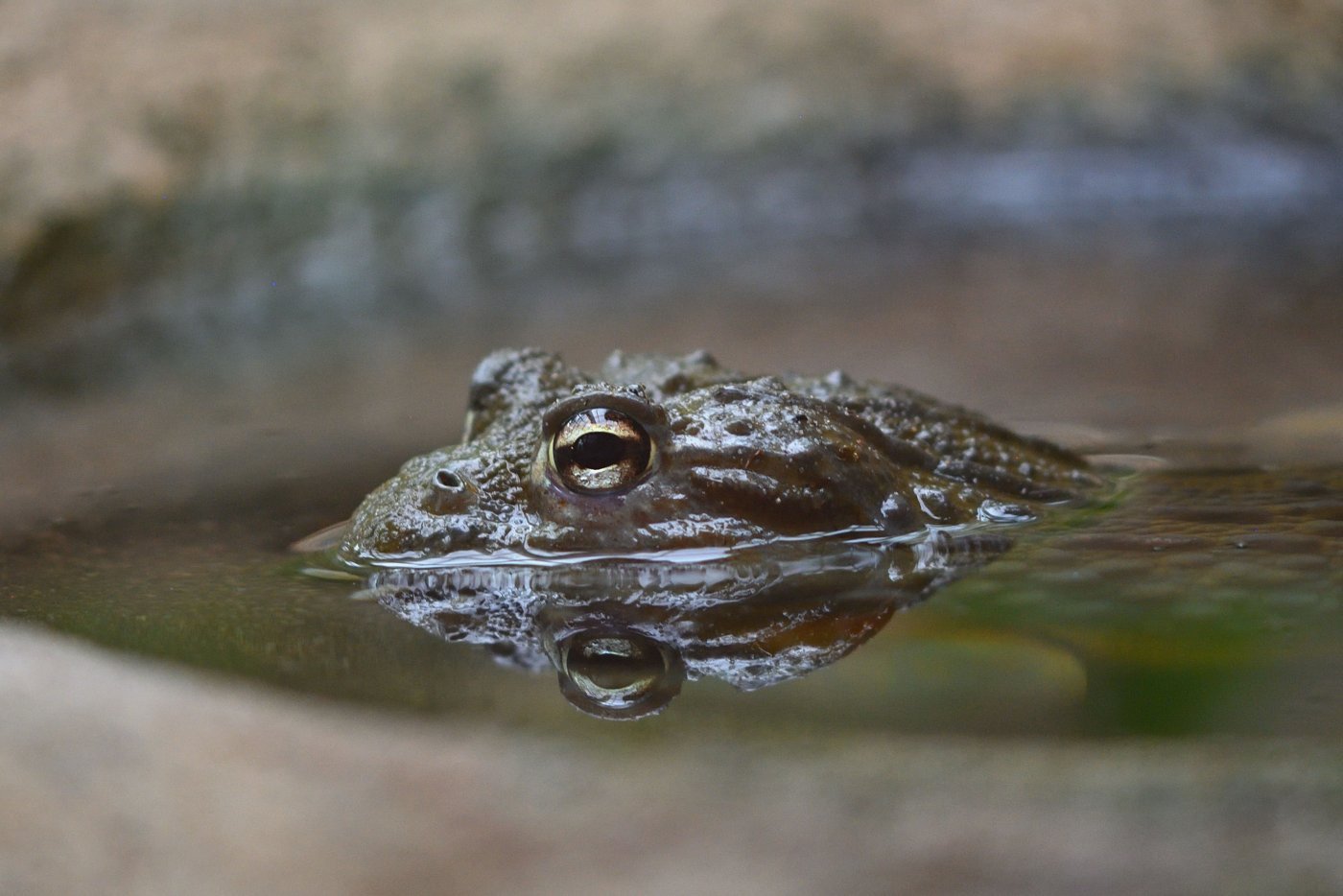
A whole animal does not have to fit inside every picture. A close view can make a small feature the main subject: one frog eye, a cat’s broad cheek, or a pretend creature’s enormous ear. The composition changes because your child chooses the picture boundary before adding all the details.
Make a simple viewing window
Fold a spare sheet and have an adult cut a broad rectangular opening in the middle, or arrange four paper strips into a loose frame. Keep the opening large enough to handle easily. Place it over a permitted reference picture without attaching it.
The frog photograph on this page already offers a close view. You can look at it as a reference without identifying the exact species or guessing what lies outside the camera’s frame.
Choose what the frame will keep
- Move the paper window across the reference.
- Find a view with one feature you want to draw.
- Notice which outlines leave the window at its edges.
- Describe the chosen view in one sentence.
- Place the frame aside and use the sentence as a drawing plan.
A useful plan might be “One eye near the top and the water line across the bottom.” This is more specific than “Draw a really big frog” and does not require copying every spot.
Draw beyond the imaginary boundary
Start with the largest visible curve. Let it meet an edge of the paper instead of shrinking it to fit. Add the important detail next. If a head continues beyond the sheet, there is no need to draw the missing part in miniature.
Whole animal versus close view
| Choice | What the picture emphasizes | Useful first mark |
|---|---|---|
| Whole animal | Body arrangement and surrounding space | A broad body shape |
| Close-up | One selected feature or surface | The largest curve inside the crop |
Neither choice is more advanced. It depends on what your child wants the viewer to notice.
Try a pretend close-up without a photo
Draw a large animal ear coming in from one side of the page, then add only part of the cheek. Invite the child to decide who is just outside the frame. A few whiskers or a tiny horn can suggest a character without a complete body.
Keep the missing area as an imaginative question. You can tell a story about it, but you do not need to turn the activity into another guessing game or reveal a correct answer.
Common questions
My child wants the entire animal visible. Should I insist on cropping?
No. Show the close-up as a choice, then let them use a whole-animal composition. A second sheet can hold the experiment if they remain interested.
Do we need to crop an actual photo file?
No. Moving a paper frame over a reference is enough. It avoids changing the source image and allows quick comparisons.
Can we use a coloring-book page?
Look at the page as a reference and draw a new close view on loose paper. Keep the original page intact so your child can return to it.
Would a ready outline suit today?
This project works with your own paper and drawings. If your child would rather begin with an animal outline, look at the real Baby Animals inside pages together. Little Wonder Club’s English paperback is intended for ages 4–8 and includes 40 baby animals, short facts, and 88 total pages. Choose it if the actual artwork appeals to your child; buying it is optional.
See the paperback and current ordering details on Amazon.
A related idea for another day
Illustrative stock photograph by Jürgen on Pexels, used under the free Pexels License. It is not a photo of our book or a demonstration of this exact project. Product details and linked factual sources checked October 10, 2026.
Explore Baby Animals
See the actual inside pages before deciding whether the book fits your child.
Check the paperback on Amazon