To suggest movement, choose one action, change the animal’s pose, and add only a few lines that support it. Compare the moving sketch with a still version so your child can see which choices communicate the action.
A rabbit can be jumping even when the paper stays perfectly still. The drawing uses clues: a tilted body, bent legs, an open space beneath the feet, or a few marks behind the animal. Start with one action so those clues can work together.
Pick an action you can describe clearly
Use a pretend animal rather than promising an anatomically exact illustration. Choose “jumping over a small puddle,” “turning its head,” or “waving a tail.” A sentence with one action is easier to draw than a character running, spinning, and flying at the same time.
Use two sheets or two broad panels on one sheet. In the first, draw the animal in a still position. The second will hold your experiment. These are comparisons, not the beginning and end of a required story.
Change the pose before adding marks
- For a pretend jumping rabbit, tilt the broad body slightly.
- Bend or tuck the simple legs instead of placing every foot on the ground.
- Leave a visible gap under the animal.
- Add a small puddle or ground mark below it.
- Pause and ask whether the action is readable already.
A child can use stick legs or rounded shapes. The drawing need not have a realistic skeleton. If they want accurate species-specific movement, consult a suitable visual reference rather than treating a cartoon pose as an animal fact.
Add a few action lines
Place two or three short curves behind the tail or body to support the chosen direction. Keep them away from features they might be mistaken for, such as whiskers or extra legs. Too many marks can make the action harder to interpret.
Compare the two sketches
| Still picture | Moving picture |
|---|---|
| Feet meet the ground | Space below the feet |
| Upright or resting body | One purposeful tilt or bend |
| No extra movement marks | A small group of supporting action lines |
These describe the chosen rabbit example, not all possible ways of showing motion. Invite your child to notice the specific change they made.
Let a viewer interpret the picture
Ask another family member what they think the animal is doing before giving the caption. If they see a different action, compare the clues without declaring the drawing wrong. Your child might decide to add a ground line, move one mark on a new sketch, or keep the surprising interpretation.
A caption can clarify the intention: “Rabbit’s enormous puddle jump.” It is optional. Children who do not want to write can dictate it or explain the action aloud.
Common questions
Do action lines need arrows?
No. Arrows can clarify a diagram, while short curves often suit a cartoon. Let the child choose the marks they want.
Do we have to make a comic afterward?
No. A single moving animal can be a complete picture. A comic or animation is a separate next project, if the child asks for one.
Can a printed outline move?
You can add motion clues around a printed character, but its body pose remains fixed. Loose paper lets your child choose the pose itself.
Would a ready outline suit today?
This project works with your own paper and drawings. If your child would rather begin with an animal outline, look at the real Baby Animals inside pages together. Little Wonder Club’s English paperback is intended for ages 4–8 and includes 40 baby animals, short facts, and 88 total pages. Choose it if the actual artwork appeals to your child; buying it is optional.
See the paperback and current ordering details on Amazon.
A related idea for another day
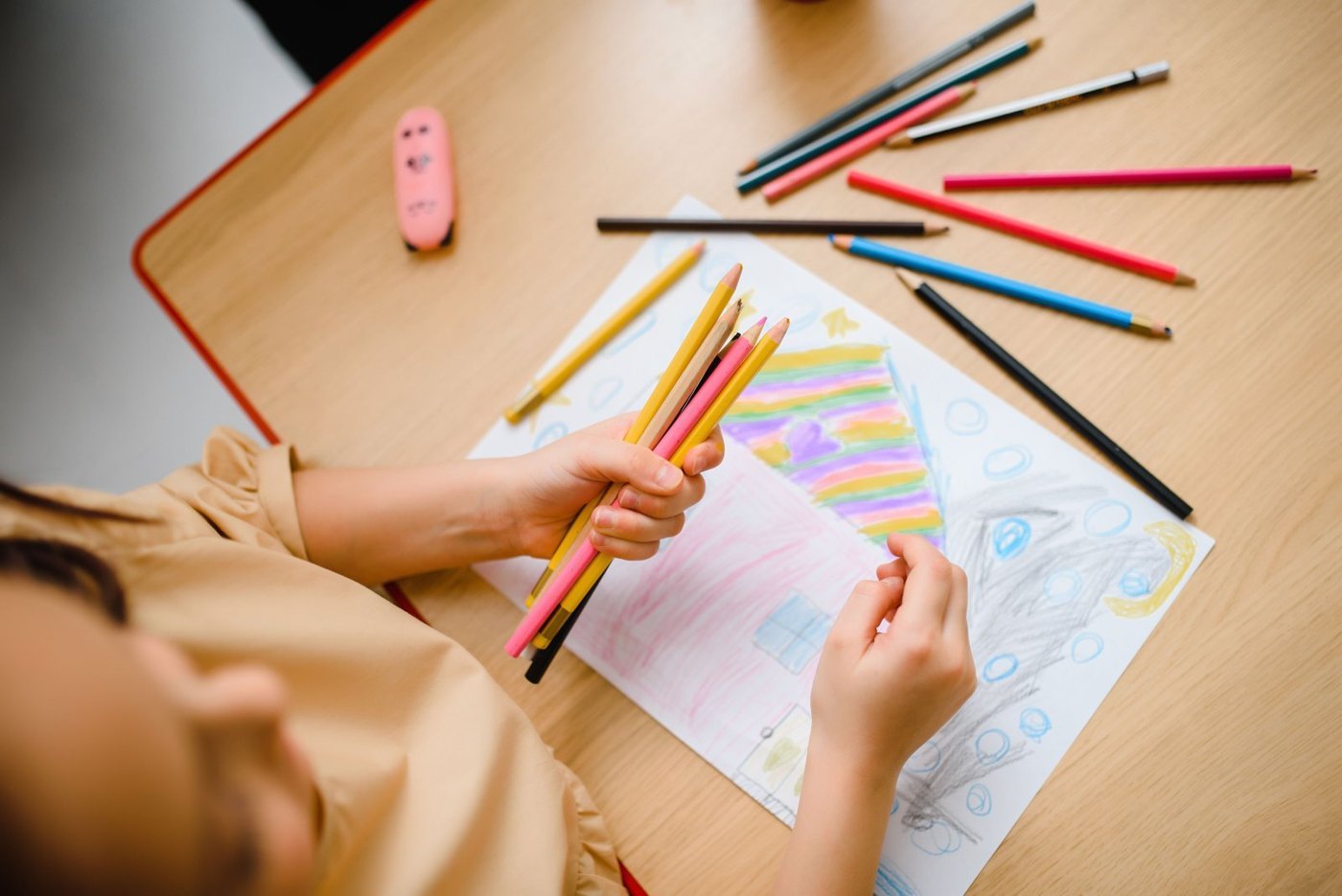
Illustrative stock photograph by Anastasia Shuraeva on Pexels, used under the free Pexels License. It is not a photo of our book or a demonstration of this exact project. Product details and linked factual sources checked October 10, 2026.
Explore Baby Animals
See the actual inside pages before deciding whether the book fits your child.
Check the paperback on Amazon