Divide loose paper into three large boxes and draw one animal facing a small problem, trying one idea, and reaching an ending. Children can dictate the words.
Give each box a job
Draw three generous boxes across a landscape sheet or use three separate sheets if small spaces feel crowded. Label them “Something happens,” “The animal tries,” and “What happens next.” These labels describe the sequence without requiring a child to write a formal story.
Pick one original animal character and repeat one recognizable feature in every panel: a large ear, a blue scarf, or a square hat. The rest of the drawing can change. A recurring detail helps the viewer follow the same character through the scene.
A worked comic: the missing picnic blanket
Panel one shows a pretend fox arriving with a snack and noticing that the blanket is missing. Panel two shows the fox unfolding a paper map to sit on instead. Panel three shows a friend arriving with the blanket; both choose where to put it. This is an invented story, not information about what wild foxes should eat.
Make the problem visible in the pictures. An empty patch beside the snack tells more than a paragraph outside the box. In the second panel, a drawn arrow can show the map opening if that action is difficult to illustrate.
Choose how to add words
Offer three options: no words, one dictated caption beneath each panel, or a short speech bubble. “Where is it?” is enough for the first picture. If an adult writes the caption, ask where it belongs before adding it. Keep the child’s phrasing rather than rewriting every sentence.
If reading order is unclear, add the numbers 1, 2, and 3 above the boxes. Do not squeeze a long explanation into a tiny bubble. A separate caption strip leaves more room for the artwork.
Read it once, then revise one thing
Invite someone to look at the pictures in order. Ask which action they noticed, not whether the comic is good. If the child wants to clarify it, change one useful detail: make the missing blanket space bigger, add the friend earlier, or draw a clearer arrow.
The comic can also remain a private drawing. Sharing is optional, and finishing all three panels is not required in one sitting. Keep a blank three-box template for another day; choose a new problem instead of making every comic a copy of this example.
A ready-made animal picture to explore
If your child wants a ready-made animal picture for a separate coloring activity, preview the 40-animal Baby Animals paperback. It has 88 total pages and an original Wild Babies cover; it is not sold as a comic template. See the actual Baby Animals inside pages, then view the English paperback on Amazon. Current price and delivery are shown there.
For a related activity, explore animal story prompts and a free story planner.
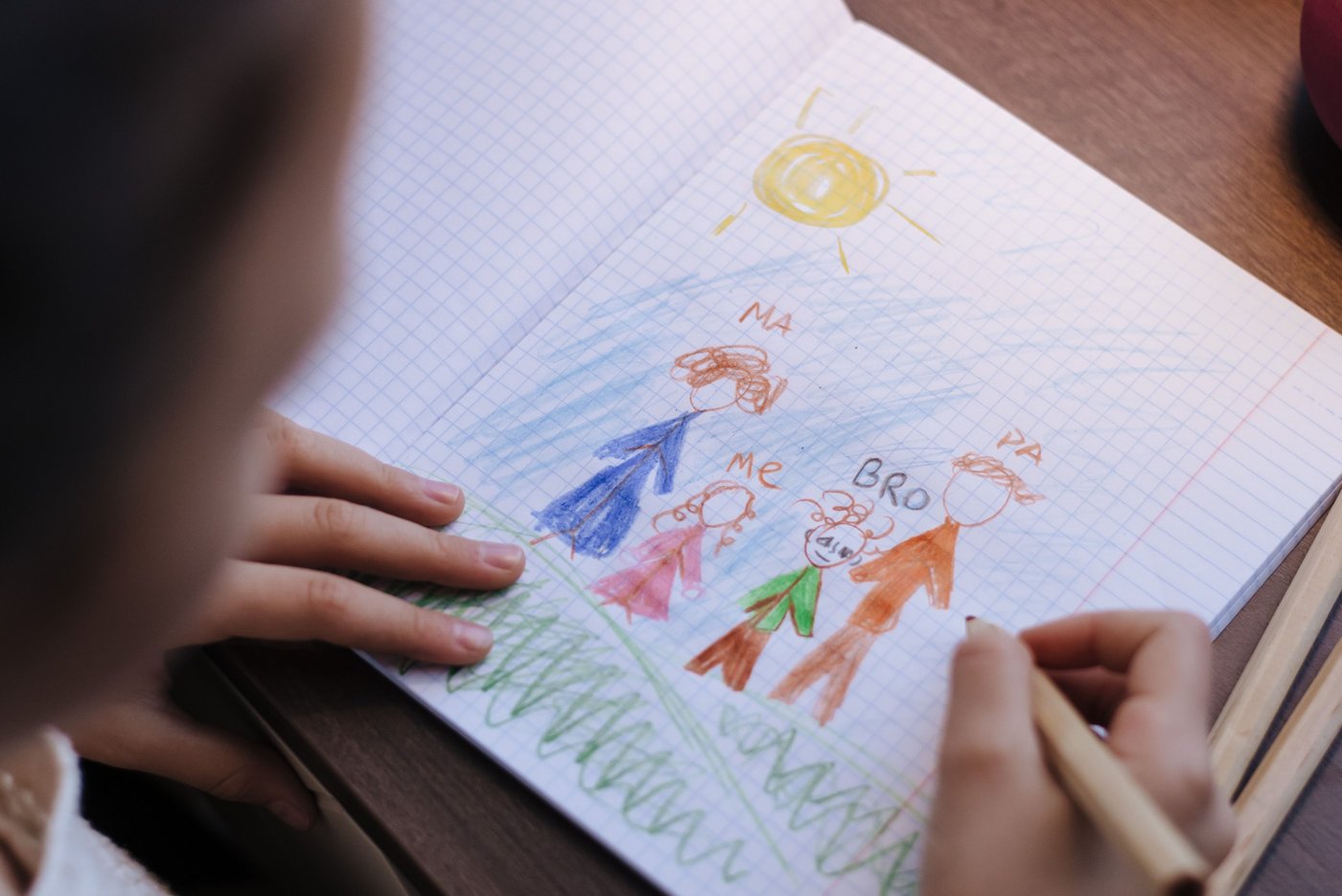
Illustrative stock photo, not a photograph of this project or our book. Photo by Ron Lach on Pexels, used under the Pexels License.
Explore Baby Animals
See the actual inside pages before deciding whether the book fits your child.
Check the paperback on Amazon