Support the paperback on a firm surface, open it only as far as it comfortably allows, and adjust your drawing position. Avoid pulling the pages or forcing the spine flat.
Check the book before choosing a support
A bound coloring book behaves differently from a loose sheet. The inner edge near the binding may be harder to reach, especially early or late in the book. Place the book on a firm, clean table and open the page you actually want to use. Observe where the paper curves before choosing a workaround.
Do not press the spine aggressively to make a photograph-like flat spread. Bindings vary, and an ordinary paperback should not be described as lay-flat unless the seller explicitly confirms that feature. A technique that suits one book may not suit another.
Try a simple position change first
Move the book slightly away from your body so the drawing hand has room. Rotate the whole book a little if that makes an inner section easier to approach. A grown-up can gently support the opposite page while the child works, without pulling it backward.
If the page still curves, support the cover beneath it with a broad, smooth object of an appropriate height. Use something stable that cannot slide easily or damage the cover. Keep the drawing surface clear of heavy, sharp, or loose items. Stop if the support makes the book less steady.
Color the accessible areas first
Start with a section away from the inner margin. Then decide whether the small curved area is worth doing today. Leaving it uncolored is an option. A partly colored picture does not need to be repaired by forcing the binding.
Imagine a large animal body in the middle of the page and a little background detail close to the gutter. You might color the body at the table and leave that detail alone. This example is about access, not a claim about the exact placement of every picture in our book.
Paperback or loose sheet for this session?
A paperback keeps its collection together and avoids loose pages. Separate paper is easier to turn or place on a different support. If freedom to rotate the sheet matters more than using a particular illustration, use an original loose drawing for that session. Choose the format that fits the task.
Before buying, inspect real inside-page samples and confirm any claims about perforation or removable pages. Our site lists Baby Animals as an 88-page English paperback; it does not establish a lay-flat binding or perforated pages. We do not promise either feature here.
A ready-made animal picture to explore
The Baby Animals edition has 40 baby animals in an 8.5 × 11-inch paperback. Look at its actual page previews to decide whether the illustration layout suits your family before checking the Amazon listing. See the actual Baby Animals inside pages, then view the English paperback on Amazon. Current price and delivery are shown there.
For a related activity, explore the seven-check coloring book preview guide.
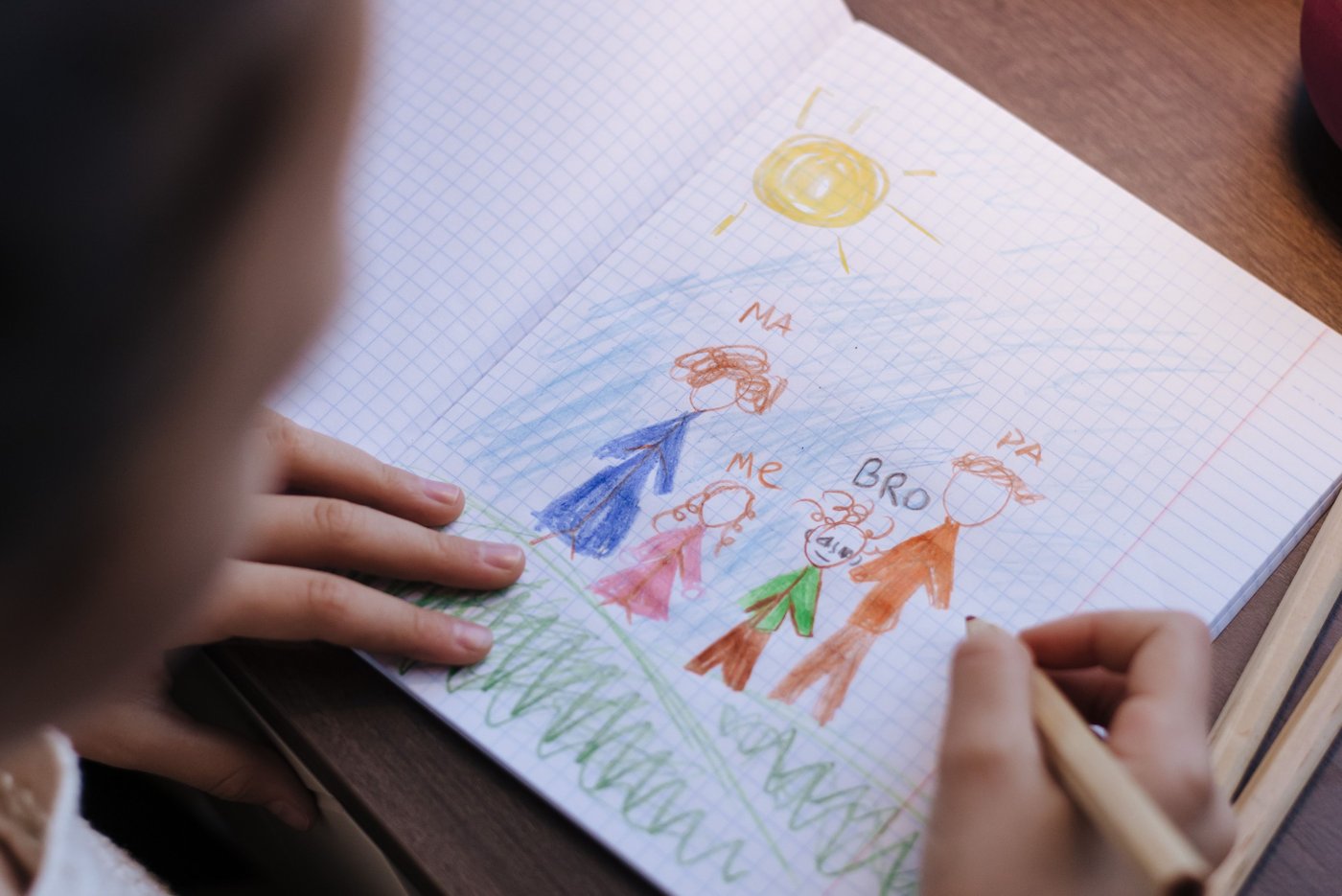
Illustrative stock photo, not a photograph of this project or our book. Photo by Ron Lach on Pexels, used under the Pexels License.
Explore Baby Animals
See the actual inside pages before deciding whether the book fits your child.
Check the paperback on Amazon