Draw a simple original animal with a few large sections, choose three colors, and make a numbered key. Put a matching number in each section. Start with only 1–3, let the child change the colors, and keep an unnumbered version available for free coloring.
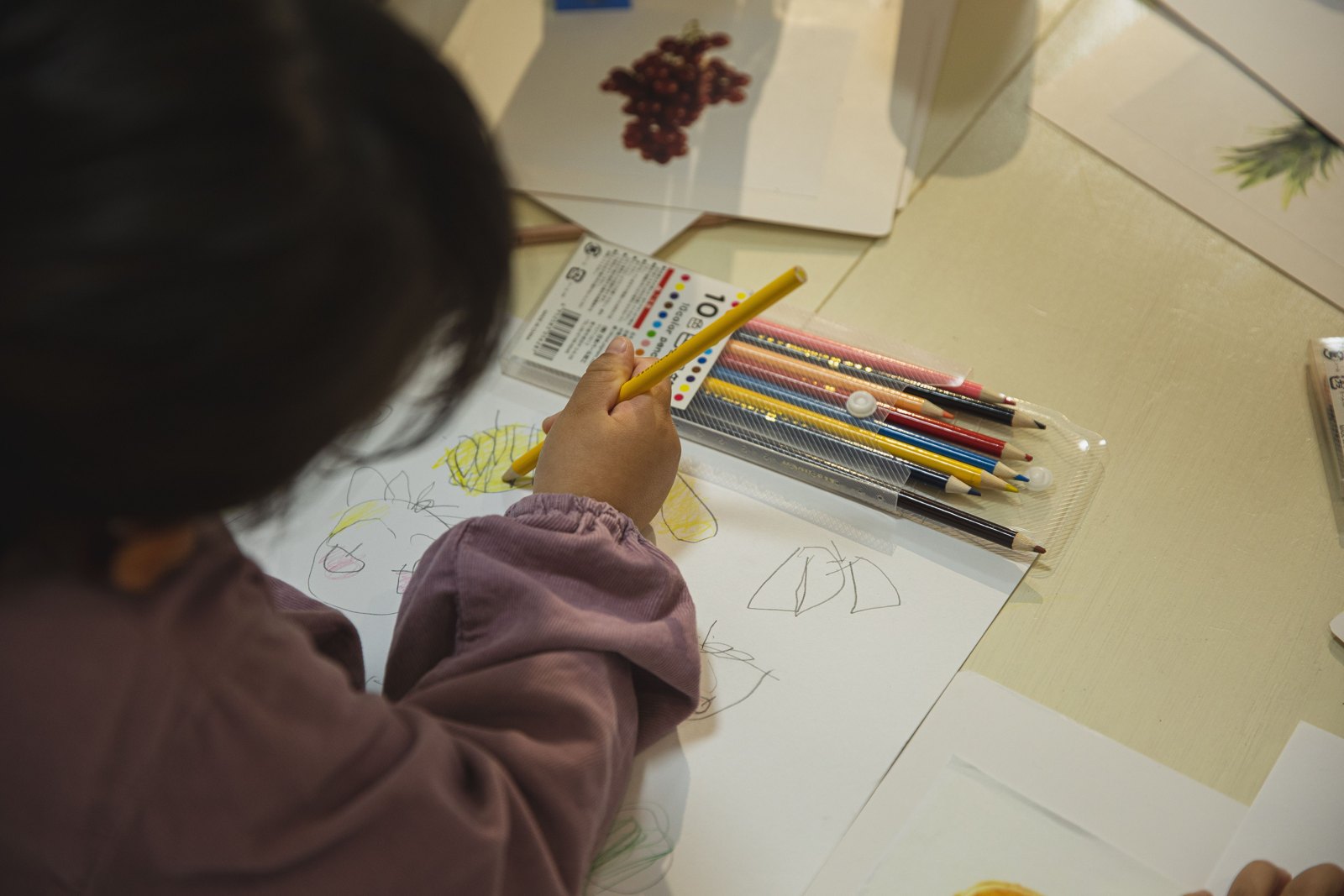
Photo: Ryutaro Tsukata / Pexels. Used under the Pexels License. Illustrative stock photography; people shown are not endorsing the book.
A homemade color-by-number page can be simpler than a downloaded worksheet because you control the number of sections. Start with one large animal and a key that fits the child’s interest. You do not need a printer, a full alphabet of codes, or a page packed with tiny shapes.
Draw a three-section animal
On blank paper, draw a large oval body, a round head, and two broad ears. Keep the shapes easy to see and leave space around them. This can become a bear, a pretend creature, or whatever animal the child names. The outline does not need to look like a professional illustration.
For the first version, treat the two ears as one color choice even though they are separate shapes. Use only three code numbers: one for the body, one for the head, and one for the ears. You are controlling the amount of information, not testing drawing accuracy.
Build the key together
| Number | Example color | Where it goes |
|---|---|---|
| 1 | Blue | Body |
| 2 | Yellow | Head |
| 3 | Purple | Ears |
Write each number beside a real color swatch. The colors above are examples, not rules. Let the child choose a different combination and update the key before numbering the picture. A blue bear is fine because this is an invented art activity.
Try one match before coloring everything
- Point to one numbered shape.
- Look for the same number in the key.
- Find the tool that matches its swatch.
- Make a small mark in the shape.
- Continue only if the child wants to use the system.
If the key causes confusion, reduce it to two numbers or replace the numerals with simple symbols such as a circle and a star. You can also abandon the code and use the same drawing for free coloring. The picture does not become less useful when the plan changes.
For a child who wants more challenge
Add a broad background area or let the child create the next coded picture for you. Agree on the key before swapping pages. The challenge can be making the instructions understandable, rather than adding increasingly tiny sections or making the adult guess hidden rules.
Separate matching from counting
Matching a printed 2 to the 2 in a key is one activity. Counting two ears is another. You can try both, but do not assume that completing the code tells you everything about a child’s number understanding. Keep the language literal: “These numbers match” and “There are two ears.”
Leave a blank version beside the numbered one. Ask whether the child wants instructions, their own choices, or a mix. That small choice lets you use the same homemade page for different moods without requiring a finished result.
Keep a reusable recipe
Afterward, note how many sections were enjoyable and which numbers or symbols worked. For the next page, change the animal rather than doubling the complexity. An original large drawing with a readable key is often more usable than an elaborate code that nobody wants to explain.
Frequently asked questions
Do I need numbers above three?
No. Start with a small key and add more only if the child wants them. Two colors or simple symbols can work for a first attempt.
Can we change the colors halfway through?
Yes. Update the key if you still want to follow a code, or switch to free coloring. The activity belongs to the people making the picture.
Choose your next small activity
Want an animal page ready to start?
For a separate coloring choice, Wild Little Wonders: Baby Animals is an English paperback for ages 4–8 with 40 baby animals, large coloring pages, and short animal facts. Preview real inside pages and check the book details, then view the paperback on Amazon for current price and delivery. The activities above also work with your own original drawings; no purchase is needed.
Explore Baby Animals
See the actual inside pages before deciding whether the book fits your child.
Check the paperback on Amazon