Choose watercolors or markers by the project and the paper you have. Watercolors need a water setup and drying space; markers need a check for transfer and bleed-through. Test the exact material on suitable scrap paper, and follow the product’s age and use instructions.
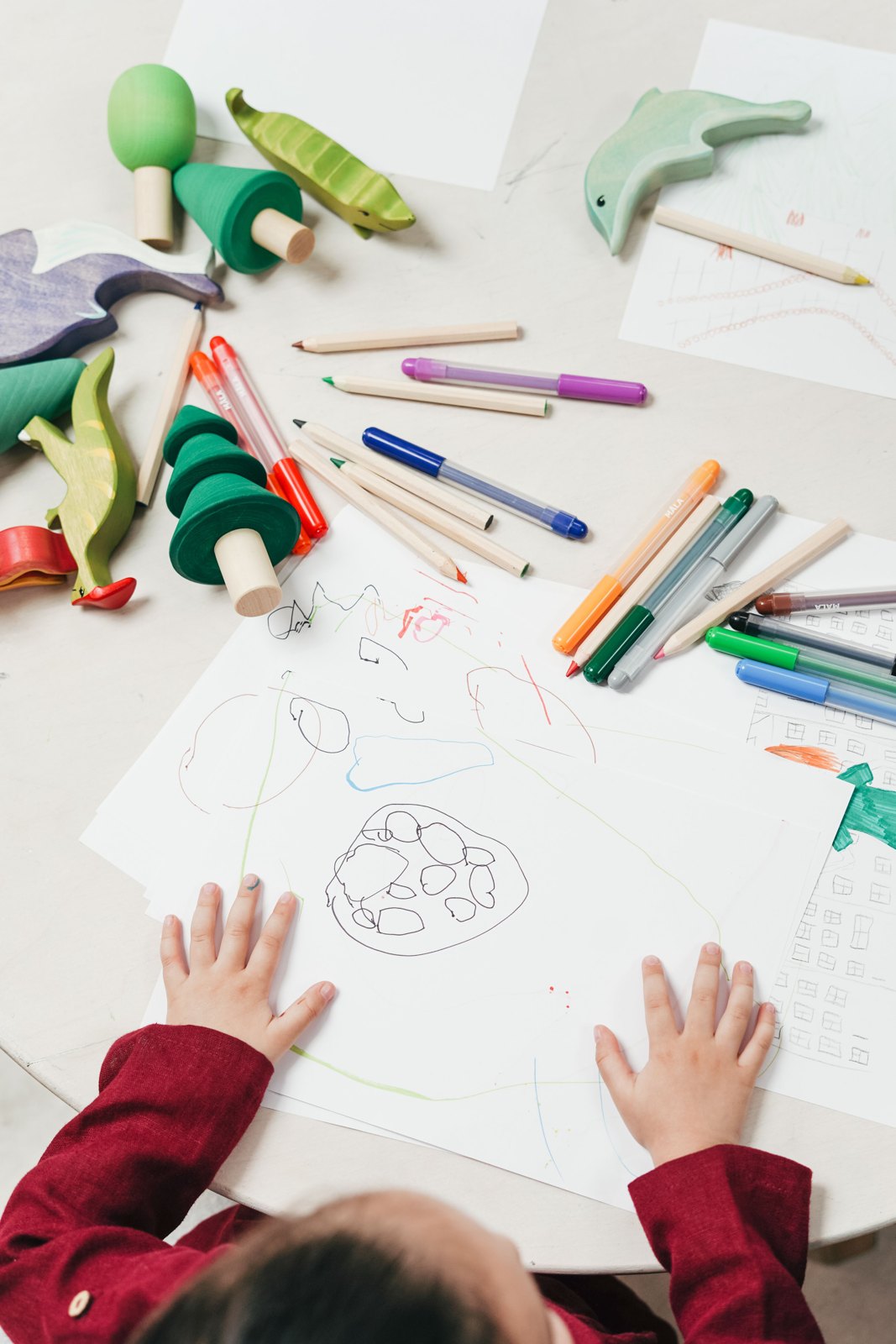
Photo: cottonbro studio / Pexels. Used under the Pexels License. Illustrative stock photography; people shown are not endorsing the book.
Watercolors and markers can both make bright pictures, but they ask different things of the workspace. The useful question is not which tool is best for every child. It is which tool fits today’s paper, time, cleanup plan, and project.
Start with the project you want to keep
A loose painting can dry on a separate surface. A bound book may have another illustration or text on the reverse of the page. A handmade card needs to remain usable after it is decorated. These differences matter more than a general “kids art” label on a supply box.
Read the paper and tool information provided by the manufacturer. Do not assume a paperback accepts wet paint or markers unless its publisher says so. If the page is important, begin with familiar dry materials or use a separate sheet for experimentation.
Compare the practical setup
| Question | Watercolors | Markers |
|---|---|---|
| What belongs on the table? | Paint, brush, water, and paper suitable for the planned wet technique. | Markers, paper, and a protected test surface. |
| Where will the picture go afterward? | A flat drying space away from traffic. | A place to dry if the marks remain wet or transfer. |
| What should I test? | How the paper behaves with your amount of water. | Bleeding, transfer, and show-through on the actual paper. |
| What needs resetting? | Water, brushes, palette, and surface. | Caps, marker storage, and surface. |
“Washable” does not mean every surface will be unaffected. Follow the product’s cleaning directions and protect the workspace instead of testing on furniture or clothing.
Make a small comparison card
- Use paper intended for the materials you plan to compare.
- Divide it into two clearly labeled sections.
- Make a few marker lines in one section.
- Make a small painted patch in the other.
- Let both dry according to the products’ directions, then inspect the front and back.
Notice the result rather than declaring a winner: how the color looks, whether the paper changes shape, and whether marks appear underneath. Results on one paper do not guarantee results on another. Keep a separate test for each project surface.
A simple decision example
If your child wants a painted sky for a loose animal drawing and you have suitable paper plus drying space, watercolors may fit the project. If the plan is a quick original birthday sign and you have already tested your markers on that card, markers may be more convenient. If neither test works well, use a different paper or a familiar dry tool.
Keep the experiment separate from the book
A child can color a book page with the tools that work for that paper and create a wet-media companion picture on another sheet. The two pieces do not need to use the same technique. This gives the art idea room to grow without risking a favorite illustration.
For any material, use the age labeling and instructions to guide your choice. Supervise the activity as needed for the individual child and the setup. This comparison is about practical project planning, not a ranking of artistic skill.
Frequently asked questions
Can I paint directly in a coloring book?
Only if the publisher’s paper guidance supports that use or you are willing to test and accept the result. A separate sheet suited to painting is a more flexible way to experiment.
Are washable markers guaranteed not to stain?
No such guarantee is made here. Follow the specific product’s instructions and test an appropriate surface before use.
Choose your next small activity
Explore the Baby Animals paperback
For a separate coloring choice, Wild Little Wonders: Baby Animals is an English paperback for ages 4–8 with 40 baby animals, large coloring pages, and short animal facts. Preview real inside pages and check the book details, then view the paperback on Amazon for current price and delivery. The activities above also work with your own original drawings; no purchase is needed.
Reference for grown-ups
CPSC Art and Craft Safety Guide. Reviewed October 8, 2026. Check the source again for current requirements or product-specific instructions.
Explore Baby Animals
See the actual inside pages before deciding whether the book fits your child.
Check the paperback on Amazon