Test the exact marker and paper with one light mark and one repeated patch in an inconspicuous area you are willing to use. Let it dry, then inspect the reverse and a protective sheet beneath. A backing sheet can protect later pages but cannot undo bleed-through on the tested page.
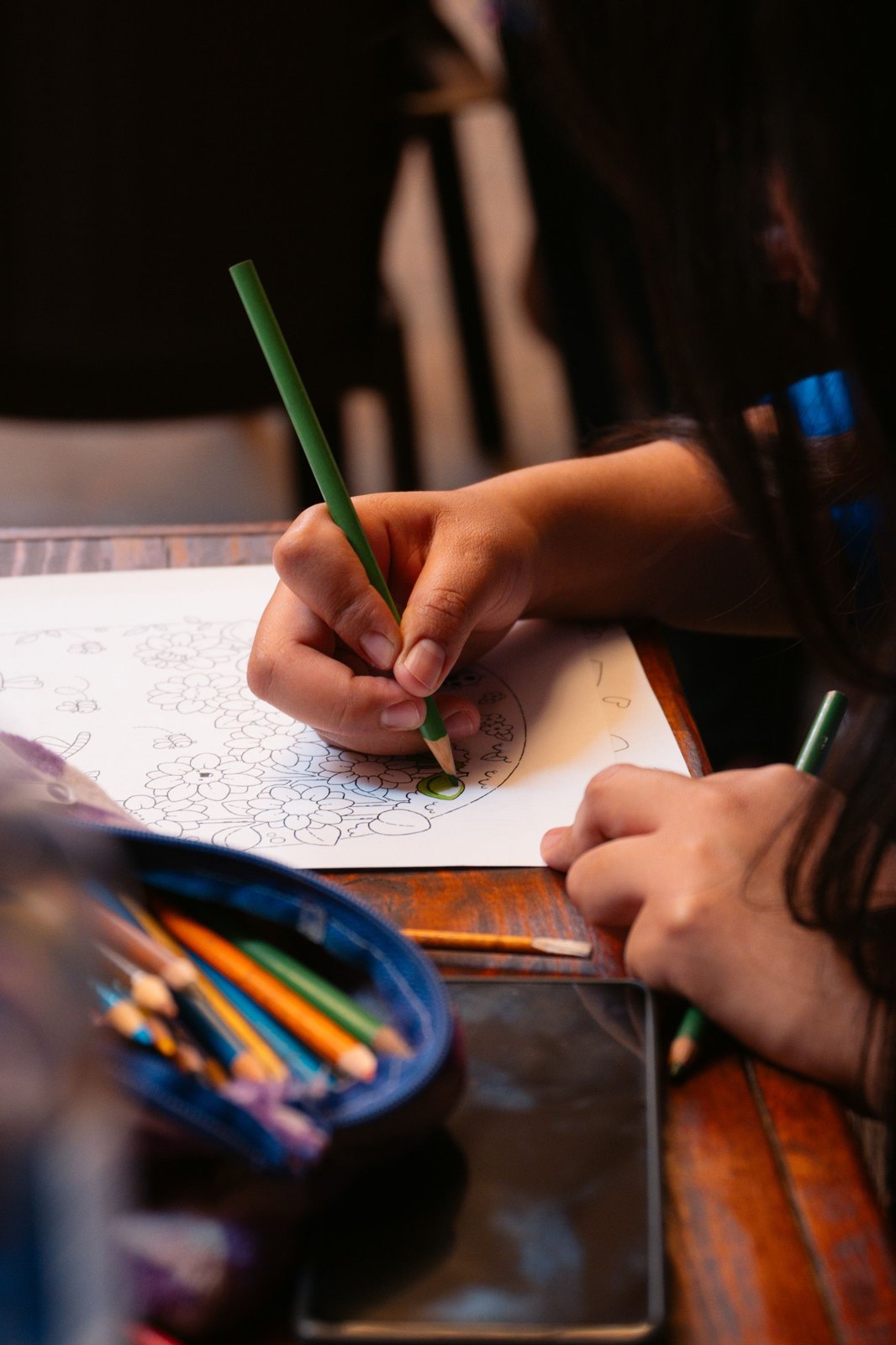
Photo: Allan González / Pexels. Used under the Pexels License. Illustrative stock photography; people shown are not endorsing the book.
A marker that works on one drawing pad can behave differently in another book. Before filling a large animal shape, use a small deliberate test. The point is to discover what the paper does before an important page becomes the experiment.
Know what you are looking for
- Show-through: the front mark is visible through the paper, even if the surface on the back is not visibly colored.
- Bleed-through: ink reaches the reverse surface.
- Transfer: color moves onto another surface that touches the marked area.
These practical distinctions help you decide what to do next. A backing sheet may catch ink that travels beyond the page. It does not make the reverse of that page immune to damage, especially when the reverse contains text or an illustration.
Choose a test area you can accept changing
Check the publisher’s guidance first. If no marker compatibility is stated, do not treat the absence of a warning as approval. Use a small area you are willing to mark, or choose a separate piece of the same paper if one is genuinely available. Ordinary printer paper is not a reliable substitute for a test of a specific book.
If you cannot find an acceptable test area, choose a familiar dry tool for the book and keep markers for a different project. You do not have to sacrifice a picture to find an answer.
A five-step test
- Place a disposable protective sheet beneath the page.
- Make one light stroke with the exact marker you plan to use.
- Make a second small patch with repeated strokes, representing how your child may actually color.
- Allow the marks to dry according to the marker instructions.
- Check the front, reverse, and protective sheet without rubbing a wet mark onto another page.
Test different marker types separately. A successful result with one set does not establish compatibility with every marker. Repeated strokes may also behave differently from a quick line, so include both in your check.
Use the result to choose your next move
| Result | Practical choice |
|---|---|
| No unwanted effect in your small test | Proceed cautiously with that tool and technique. |
| Visible show-through bothers you | Use a different medium or separate drawing paper. |
| Ink reaches the reverse | Avoid that marker on pages whose backs you want to preserve. |
| Ink marks the protective sheet | Keep the book protected and reconsider the medium. |
Do not confuse a single-sided picture with unlimited ink tolerance
A page can have no picture on its reverse and still allow ink onto the next sheet. Layout and material compatibility are separate questions. Check the actual spread and the actual marker instead of relying on a cover phrase alone.
Let children take part in the decision
Show the test and say, “This blue mark reached the back. Do you want these pencils in the book or these markers on another sheet?” That gives the child a meaningful choice without turning the outcome into a warning about being careful enough.
Save the tested scrap or make a brief note about the exact supplies. Your next session then starts with a useful record rather than repeating the same uncertainty.
Frequently asked questions
Will cardstock beneath the page stop bleed-through?
It can help protect later surfaces, but it cannot prevent ink from reaching the reverse of the coloring page itself.
Can I use a result from a different book?
Treat it only as a clue. Paper and layout vary, so test the specific book and marker combination or choose another medium.
Choose your next small activity
Keep a book beside the blank paper
For a separate coloring choice, Wild Little Wonders: Baby Animals is an English paperback for ages 4–8 with 40 baby animals, large coloring pages, and short animal facts. Preview real inside pages and check the book details, then view the paperback on Amazon for current price and delivery. The activities above also work with your own original drawings; no purchase is needed.
Reference for grown-ups
Crayola guidance on protecting paper from alcohol-marker bleed-through. Reviewed October 8, 2026. Check the source again for current requirements or product-specific instructions.
Explore Baby Animals
See the actual inside pages before deciding whether the book fits your child.
Check the paperback on Amazon