Keep broken crayons that are still comfortable to hold and suitable for the child. Use them for side shading, broad color patches, or simple original drawings on scrap paper. You do not need to melt crayons or turn very small fragments into a children’s activity.
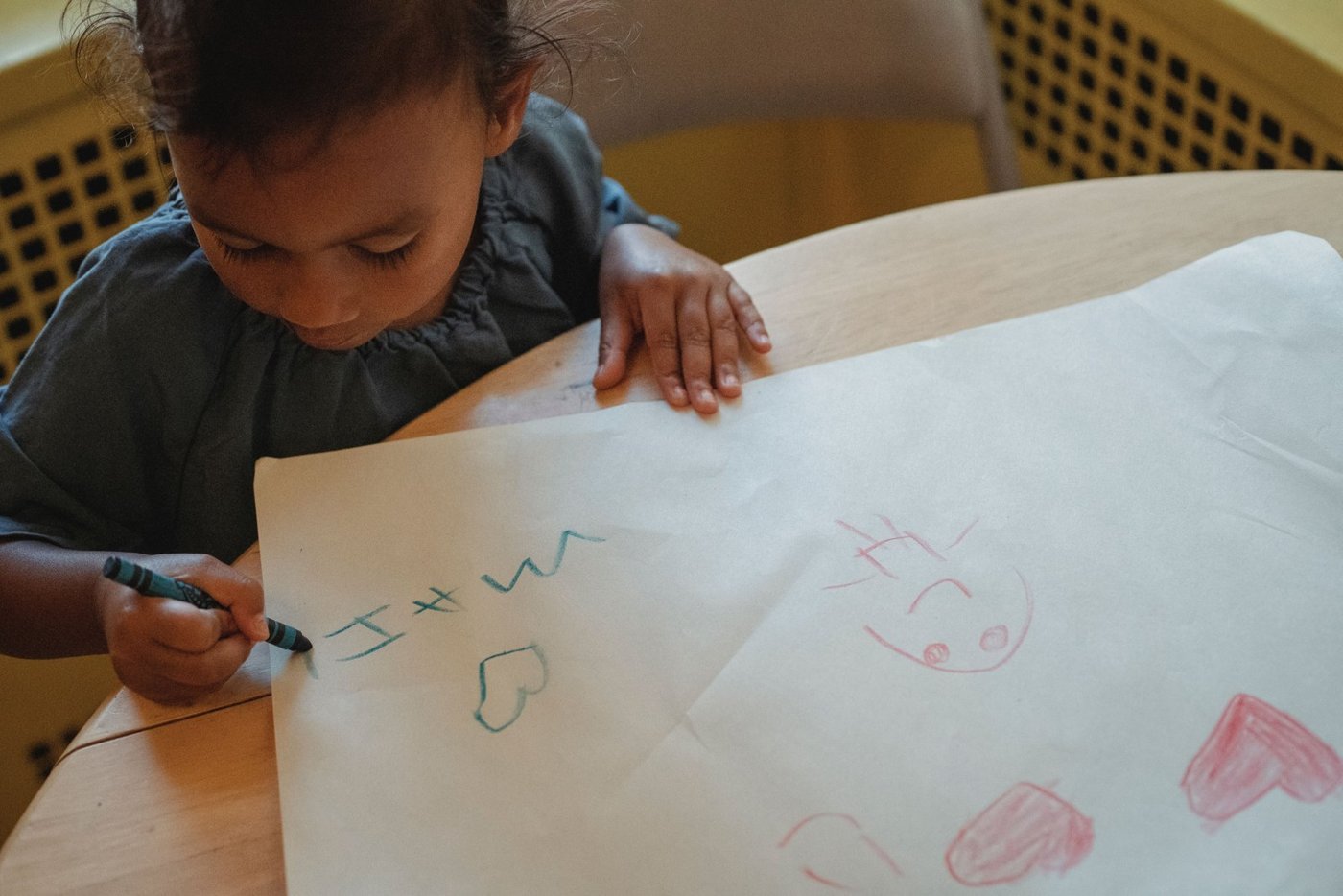
A crayon snaps while your child colors a large sky. The remaining pieces may still be useful without a craft recipe, oven, or new purchase. Sort what you have, try a mark on scrap paper, and keep only the pieces that make the activity easy to use.
Sort for use rather than saving everything
Separate comfortable pieces from tiny fragments, dirty pieces, and any crayons you cannot identify. Use known children's art materials and follow their packaging guidance. Keep small fragments away from younger children who may mouth them; discard pieces that do not suit your household. A broken supply does not have to be preserved at all costs.
Place the usable pieces in a shallow container where the colors are visible. If the wrapper comes away cleanly, a grown-up can remove a loose section to expose more of the side. There is no need to strip every wrapper or make a large collection.
Five ways to make marks without heat
1. A broad animal background
On blank paper, draw your own simple animal outline. Try the side of a suitable crayon beside the drawing for a broad patch of sky or grass. Test first so you can see the width of the mark before using a favorite page.
2. A three-color patchwork
Divide a scrap sheet into six large boxes. Choose three crayon colors and repeat them in any arrangement. Invite the child to give the pattern a name, such as “Sunset Blanket.” Matching every box is optional.
3. An animal camouflage costume
Draw a pretend cat or lizard and add broad patches with different crayons. Call it an invented costume rather than presenting the colors as an animal fact. If your child asks about a real animal's coat, look at a reliable species photo together.
4. A line-and-patch comparison
Use the end of a crayon to make a line and its side to make a patch. Ask which mark the child would choose for a whisker, a cloud, or a large body. This is a materials experiment, not a grip lesson.
5. A color-ticket collection
Make several large color patches on separate pieces of paper. Lay them next to an original animal drawing and let the child select a “ticket” for each area. A grown-up can write the color names if wanted.
A worked scene with only two pieces
Draw a simple bear outline on loose paper. Use a brown crayon piece for the body and a blue piece for three sky patches around it. Add a ground line with the end of the brown piece. Two colors are enough to make a complete invitation; do not stop the activity to find a perfect green for the ground.
What to do when a piece is awkward
If the child cannot use a fragment comfortably, offer a longer crayon or another tool. Do not insist that the broken piece is better for them. The test is whether it works for this task today. Keep an intact option nearby so experimenting stays optional.
Reset the tray in one minute
Return usable pieces to the container, collect wrapper scraps, and clear the paper surface before placing a book there. Let the child choose one piece to try again next time. You can keep fewer supplies and still have many possible pictures.
Do I need to melt the fragments into new shapes?
No. All five ideas use the crayons as they are. If your pieces no longer work, replacing or discarding them is a reasonable choice.
A ready-made animal coloring option
If your child would like a picture to start with, preview the real Baby Animals pages. Little Wonder Club lists this English paperback for ages 4–8 with 40 baby animals, short facts, and 88 total pages. The original cover reads Wild Babies: A Coloring Journey Through the Animal Kingdom. Choose it for the pictures and layout your child enjoys; it is optional for this activity.
View the paperback and current ordering details on Amazon.
Keep exploring
Illustrative stock photo by Kamaji Ogino on Pexels, used under the free Pexels License. The photo does not show our book or demonstrate this specific project. Book details and linked factual sources checked October 9, 2026.
Explore Baby Animals
See the actual inside pages before deciding whether the book fits your child.
Check the paperback on Amazon