If a child colors outside the lines, first ask whether they want help. For playful coloring, let the marks stand. If they want more control, offer a larger shape and a scrap-paper border experiment without turning the whole picture into a neatness test.
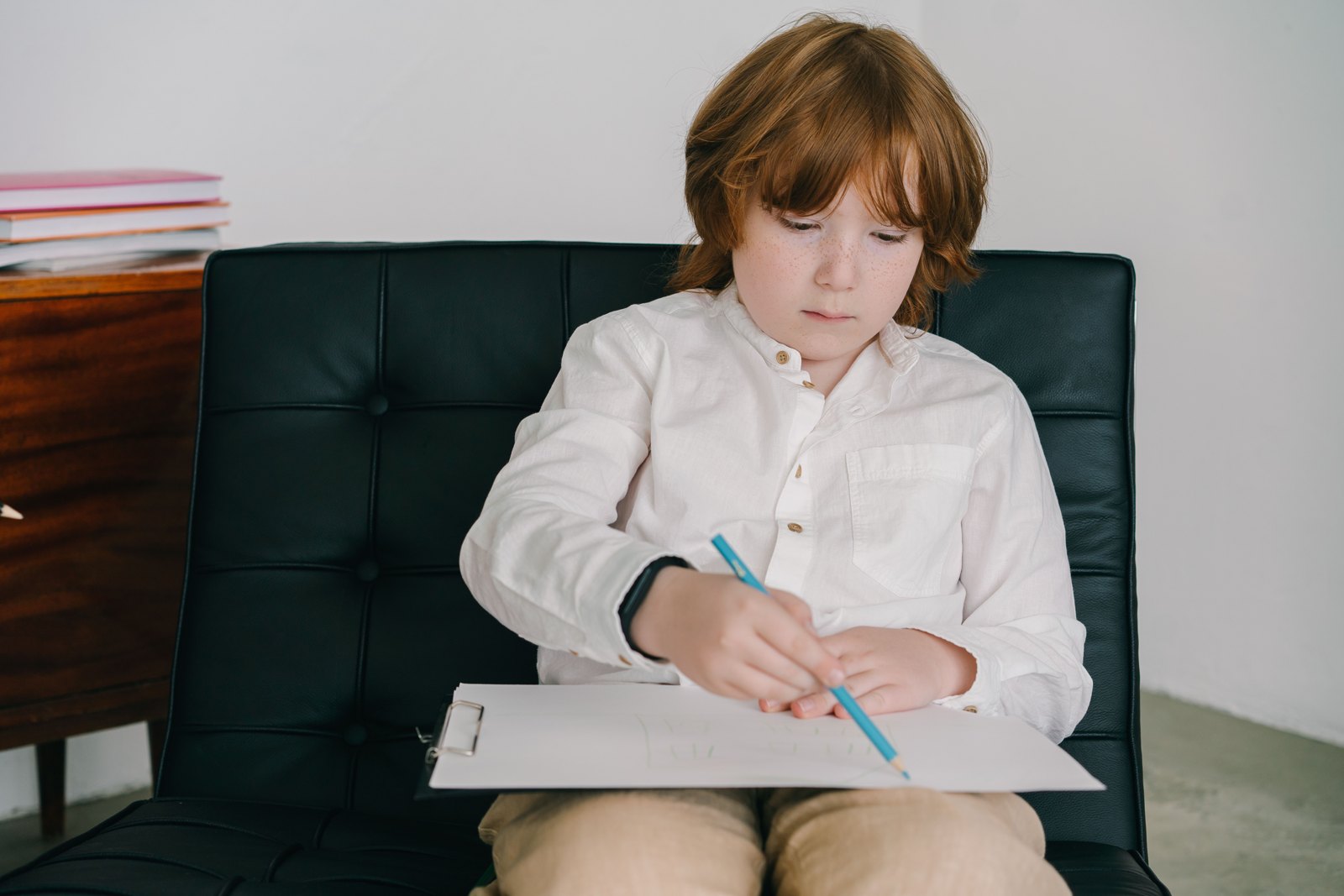
Photo: Mikhail Nilov / Pexels. Used under the Pexels License. Illustrative stock photography; people shown are not endorsing the book.
“Stay inside the lines” can become the loudest instruction at a coloring table, even when the activity was supposed to be fun. Before deciding what to say, separate two situations: a child who is happily making broad marks and a child who is upset because the result does not match what they intended.
If the child is enjoying the picture
You do not need to interrupt just because a mark crosses an outline. Ask about the picture instead: “What is happening here?” or “Would you like to tell me about this blue part?” Let silence be an option too. Some children prefer coloring without commentary.
A published outline is an invitation to make choices, not a requirement to reproduce the cover example. A child can add a background, cover an edge, leave part white, or invent a different color. Decide whether neatness is actually relevant to your activity before making it the focus.
If the child says the picture is ruined
Start with a concrete acknowledgment: “That mark went farther than you wanted.” Then offer a small choice rather than a long reassurance speech. “Do you want to leave it, add something around it, or try on another sheet?” The child can also stop.
| Instead of | Try |
|---|---|
| It is perfect, do not worry. | You had a different idea. Want to tell me? |
| You need to be more careful. | Would a bigger shape be easier to try? |
| Let me fix it. | Would you like help or your own space? |
| Finish it anyway. | We can save this and choose what to do next. |
An optional border experiment
- Draw one large circle on scrap paper.
- Let the child choose a familiar coloring tool.
- Try a small patch in the middle.
- If they want, approach one part of the edge with slower, shorter marks.
- Compare the two patches only if the child is interested.
Keep this separate from the favorite book page. You are offering a way to explore a technique, not requiring the child to practice before being allowed to color. There is no need for a timer, score, or percentage of marks inside the line.
Turn an unexpected mark into a story, if invited
A stripe extending beyond an animal could become grass, a scarf, or a trail on a separate drawing. But do not impose that solution. A child who wanted a realistic picture may not want a playful explanation. Ask before changing the meaning of their work.
Choose an easier starting point when requested
Some pages contain tiny spaces; others leave broad areas for color. Show the actual inside page rather than relying only on an age range printed on the cover. Let the child point to a section they want to try. Starting with one ear or one large cloud can feel more manageable than announcing a complete-page goal.
Coloring performance alone is not a developmental assessment. If your concern goes beyond this activity, discuss that concern with an appropriate professional. At the table, keep the invitation specific, optional, and guided by what the child says they want.
Frequently asked questions
Should every coloring session include staying inside the lines?
No. Decide whether the child wants playful expression or to explore a particular technique. The two goals can use different sheets.
What if my child wants a new page immediately?
Offer another sheet if available and ask whether to keep the first. Restarting can be a choice without making the earlier picture a failure.
Choose your next small activity
Pair the project with a ready-made animal page
For a separate coloring choice, Wild Little Wonders: Baby Animals is an English paperback for ages 4–8 with 40 baby animals, large coloring pages, and short animal facts. Preview real inside pages and check the book details, then view the paperback on Amazon for current price and delivery. The activities above also work with your own original drawings; no purchase is needed.
Explore Baby Animals
See the actual inside pages before deciding whether the book fits your child.
Check the paperback on Amazon