Frogs often have smoother, moister-looking skin and longer legs; toads often have bumpier-looking skin and shorter legs. These are common clues with exceptions, and the word frog can include toads. A photo alone may not settle an identification.
Two pond-side animals can look similar enough to start a lively family debate. Instead of deciding that every bumpy animal must be a toad, compare a few common clues and keep room for exceptions. Your child can draw the comparison without collecting or touching a live animal.
Keep the explanation precise
San Diego Zoo Wildlife Alliance’s frog and toad guide says frogs often have longer legs and smooth, moist skin, while toads often have shorter legs and drier, bumpy-looking skin. It also explains that “frog” can include toads and that exceptions occur. These tendencies are useful comparisons, not a species-identification test.
Compare one clue at a time
| Clue | Common frog description | Common toad description |
|---|---|---|
| Skin appearance | Smoother and moist-looking | Bumpier and drier-looking |
| Legs | Often longer | Often shorter |
| Certainty | Exceptions mean these clues do not identify every animal | |
A photograph may hide the legs or show wet skin in lighting that obscures the surface. Write “not visible” beside a missing clue. Do not fill the blank by assuming the reference must match the table.
Draw a comparison rather than a verdict
Use two large panels on plain paper. Draw an invented example with long back legs in the first and a shorter-legged example in the second. Add a few surface marks to only one panel. Label the drawing “Common clues, not every species.”
- Choose one feature to compare first.
- Make that feature large enough to see.
- Add a broad body shape around it.
- Leave uncertain details out.
- Say what the two sketches were designed to show.
The sketches are models of selected tendencies. They are not illustrations of named species unless you use and identify a specific reference.
Use the stock photograph carefully
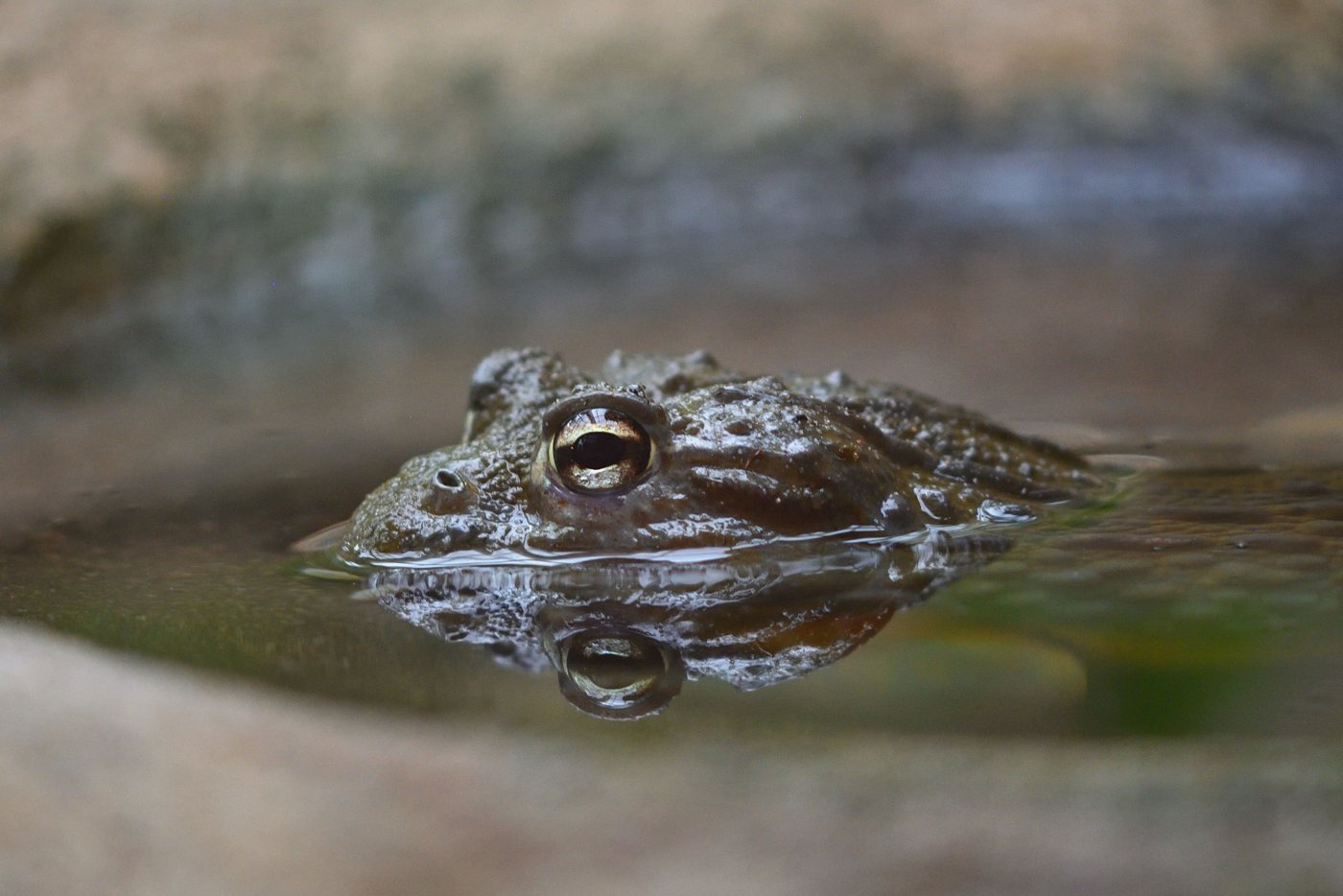
The credited frog photo shows an animal partly in pond water. It is useful for noticing a visible eye, a water line, and a partial head. It does not show enough of the full body to compare every leg and skin clue in this activity. Keep its general source description rather than inventing a species name.
A helpful family response
When someone says, “It must be a frog because it is in water,” try “That is one clue. What else can we actually see?” A single background detail does not resolve every identification question.
Questions parents ask
Should we catch one to compare it?
No. Use permitted photographs or published species guides for this paper project. Leave wildlife observation at a respectful distance.
Is this another life-cycle lesson?
This activity compares adult-looking features and uncertainty in identification. A life-cycle sequence asks a different question and can be explored separately.
What if we still do not know?
Keep the label uncertain. A specific species guide or a qualified local reference is more useful than making the drawing fit a simplified rule.
Would a ready outline suit today?
This project works with your own paper and drawings. If your child would rather begin with an animal outline, look at the real Baby Animals inside pages together. Little Wonder Club’s English paperback is intended for ages 4–8 and includes 40 baby animals, short facts, and 88 total pages. Choose it if the actual artwork appeals to your child; buying it is optional.
See the paperback and current ordering details on Amazon.
A related idea for another day
Illustrative stock photograph by Jürgen on Pexels, used under the free Pexels License. It is not a photo of our book or a demonstration of this exact project. Product details and linked factual sources checked October 10, 2026.
Explore Baby Animals
See the actual inside pages before deciding whether the book fits your child.
Check the paperback on Amazon