To explore near and far, draw two animals of the same kind at different sizes, then try overlap or a shared ground scene. Treat these as picture-making choices rather than a rigid rule that every small animal is far away.
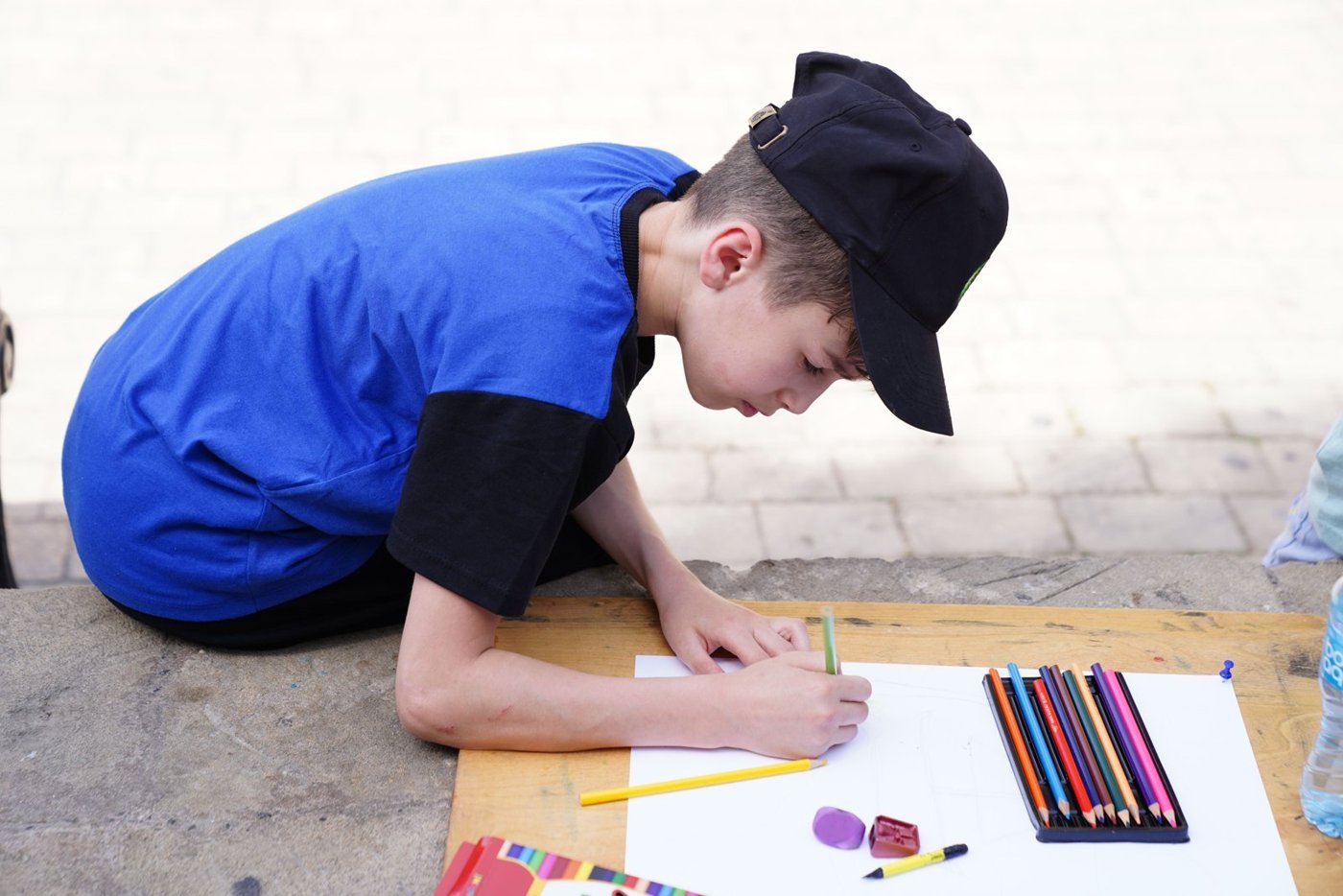
Your child draws a tiny animal next to a huge one. Are they different species, a parent and a baby, or the same kind of animal at different distances? The picture does not answer that question automatically. This activity gives your family a clear way to try distance as one possible explanation.
Choose one kind of pretend animal
Use plain paper and familiar drawing tools. Pick a simple shape you can repeat, such as a round rabbit with two long ears. Say that, for this experiment, both rabbits are meant to be roughly the same size in their imaginary world.
This starting decision matters. If one animal is a baby and another an adult, a size difference may tell a different story. Keep the example simple enough to compare the drawing choices you are testing.
Try size first
- Draw one large rabbit low on the paper.
- Draw a smaller rabbit farther up the sheet.
- Add a broad ground area or path connecting their space.
- Ask which animal seems closer in this particular picture.
The page placement is a helpful convention in this simple landscape, not a universal rule for all art. Your child might see a rabbit on a hill instead. Let them explain what other clues their interpretation uses.
Try overlap on a separate small sketch
Draw one broad animal outline, then another partly behind it. Stop the hidden portion of the back animal where the front one covers it. If two full outlines have already been drawn, you can still compare that transparent-looking result with a new sketch.
Three distinct picture choices
| Choice | Try | Check |
|---|---|---|
| Relative size | One large and one small rabbit | Are they meant to be the same real-world size? |
| Overlap | One partly covers another | Which animal is in front? |
| Placement | Put a small rabbit along a receding path | Does the surrounding scene support the distance idea? |
Do not add all three at once if your child wants to compare their effects. Separate mini sketches can make the choices easier to discuss.
Make one finished scene if desired
Choose the version the child likes and add a single background feature. A path might bend toward the small rabbit; a tree might partly hide it. Avoid filling the page with tiny details merely to make it look finished.
Ask the child for a caption. “Two same-sized rabbits, one close and one far” makes the intended comparison explicit. “A giant rabbit visiting a tiny friend” is also a valid story, but it changes the experiment’s premise.
Parent questions
Do we need a ruler or vanishing point?
No. This activity explores size and overlap informally. A technical perspective lesson would introduce different steps.
Can we practice inside a coloring book?
The printed arrangement is already set. Use a loose companion sheet to change distances and keep the book page available for coloring.
Would a ready outline suit today?
This project works with your own paper and drawings. If your child would rather begin with an animal outline, look at the real Baby Animals inside pages together. Little Wonder Club’s English paperback is intended for ages 4–8 and includes 40 baby animals, short facts, and 88 total pages. Choose it if the actual artwork appeals to your child; buying it is optional.
See the paperback and current ordering details on Amazon.
A related idea for another day
Illustrative stock photograph by Tahir Xəlfəquliyev on Pexels, used under the free Pexels License. It is not a photo of our book or a demonstration of this exact project. Product details and linked factual sources checked October 10, 2026.
Explore Baby Animals
See the actual inside pages before deciding whether the book fits your child.
Check the paperback on Amazon